One-Man Band
A tabletop synthesizer that turns a single performer into a full band
一台让独奏者成为整支乐队的桌面合成器
Loop-station performers can turn one musician into an entire ensemble — after years of practice. One-Man Band builds that power into the instrument itself, so anyone can play melody, drive the beat, and mix a live set with two hands.
Loop Station 的演奏者能以一人之力撑起整支乐队——但那背后是经年累月的功底。 《一人乐队》把这种能力直接造进乐器:旋律、节奏与混音,尽在双手之间。
Overview
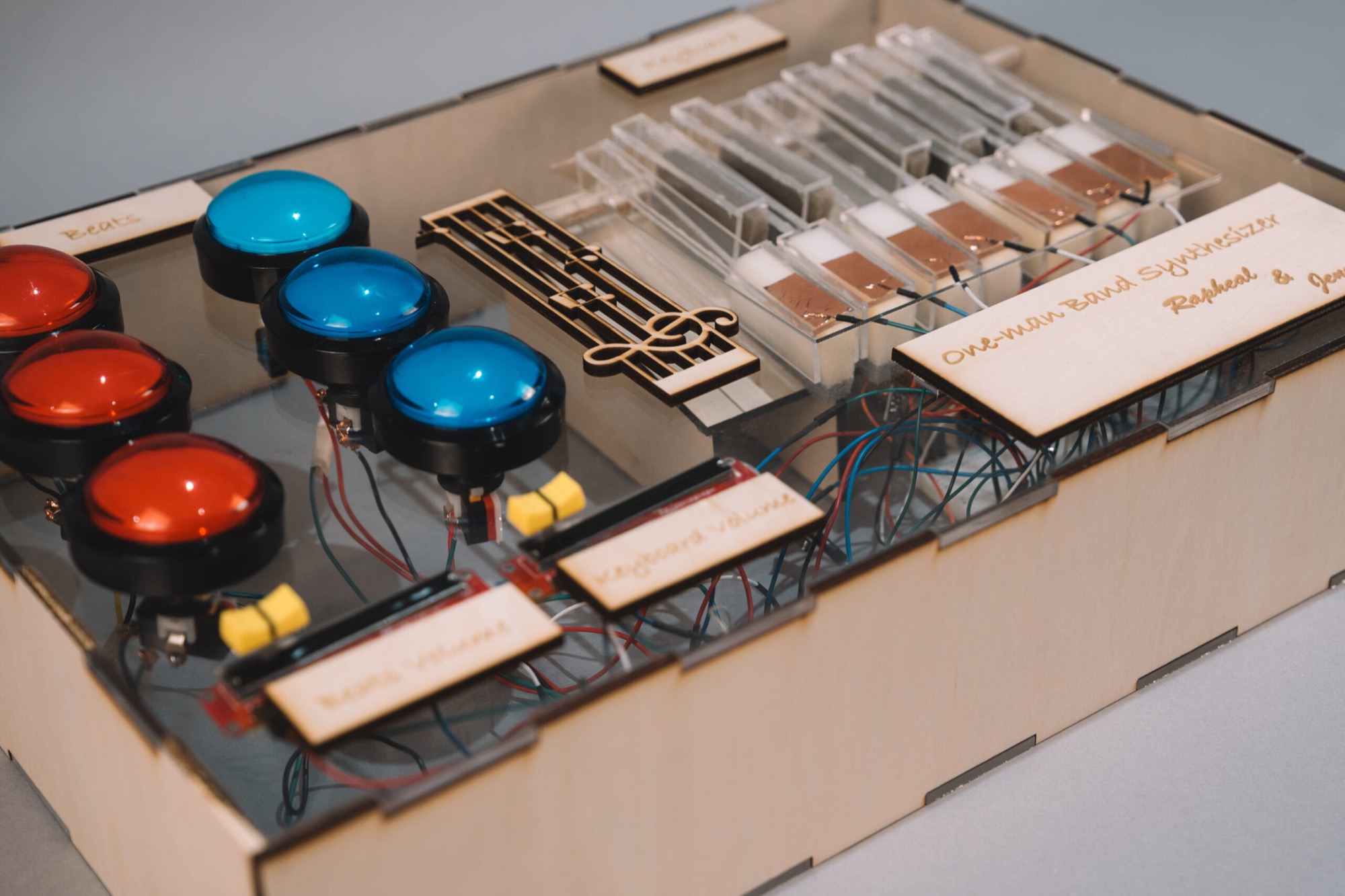
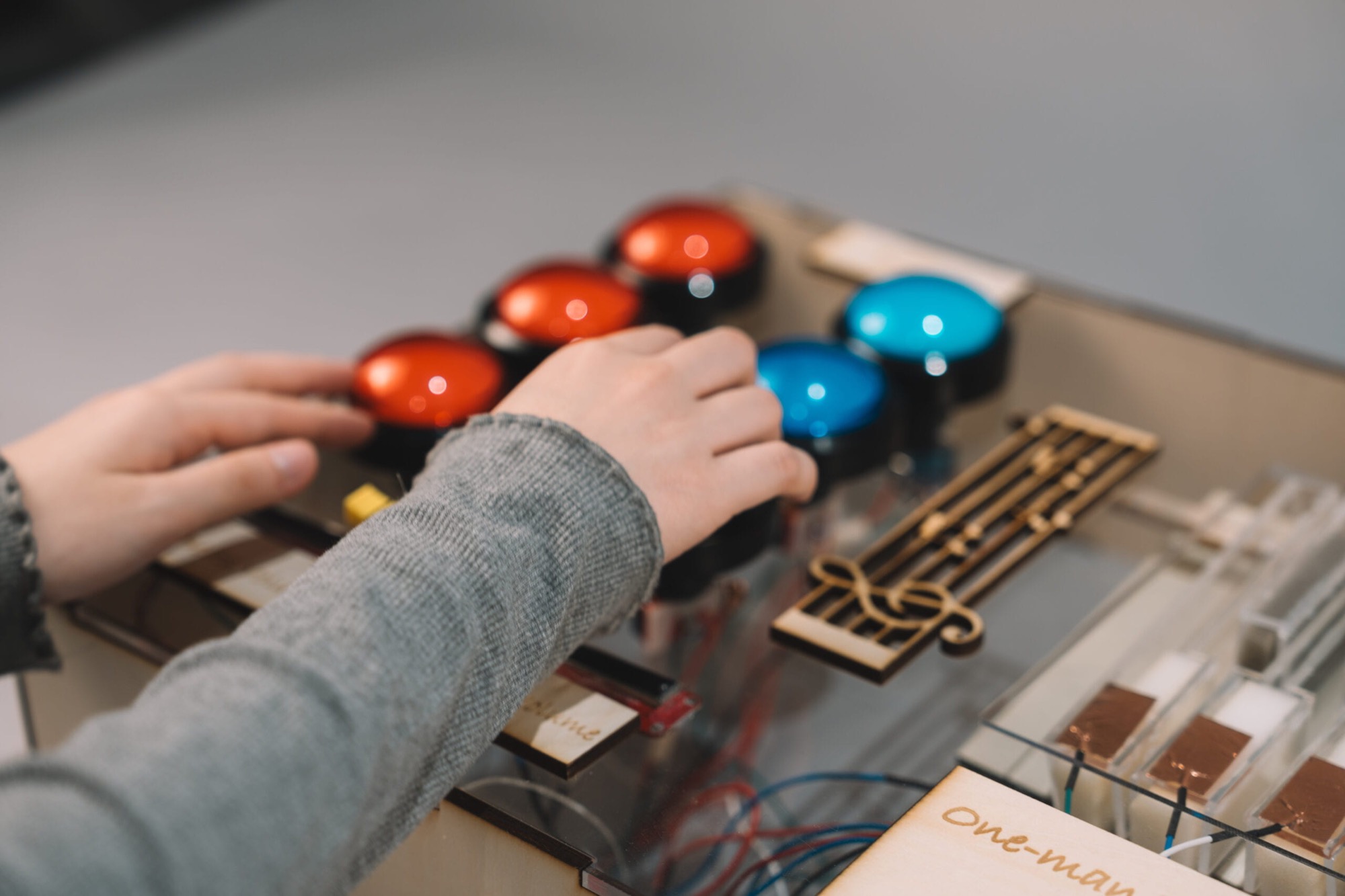
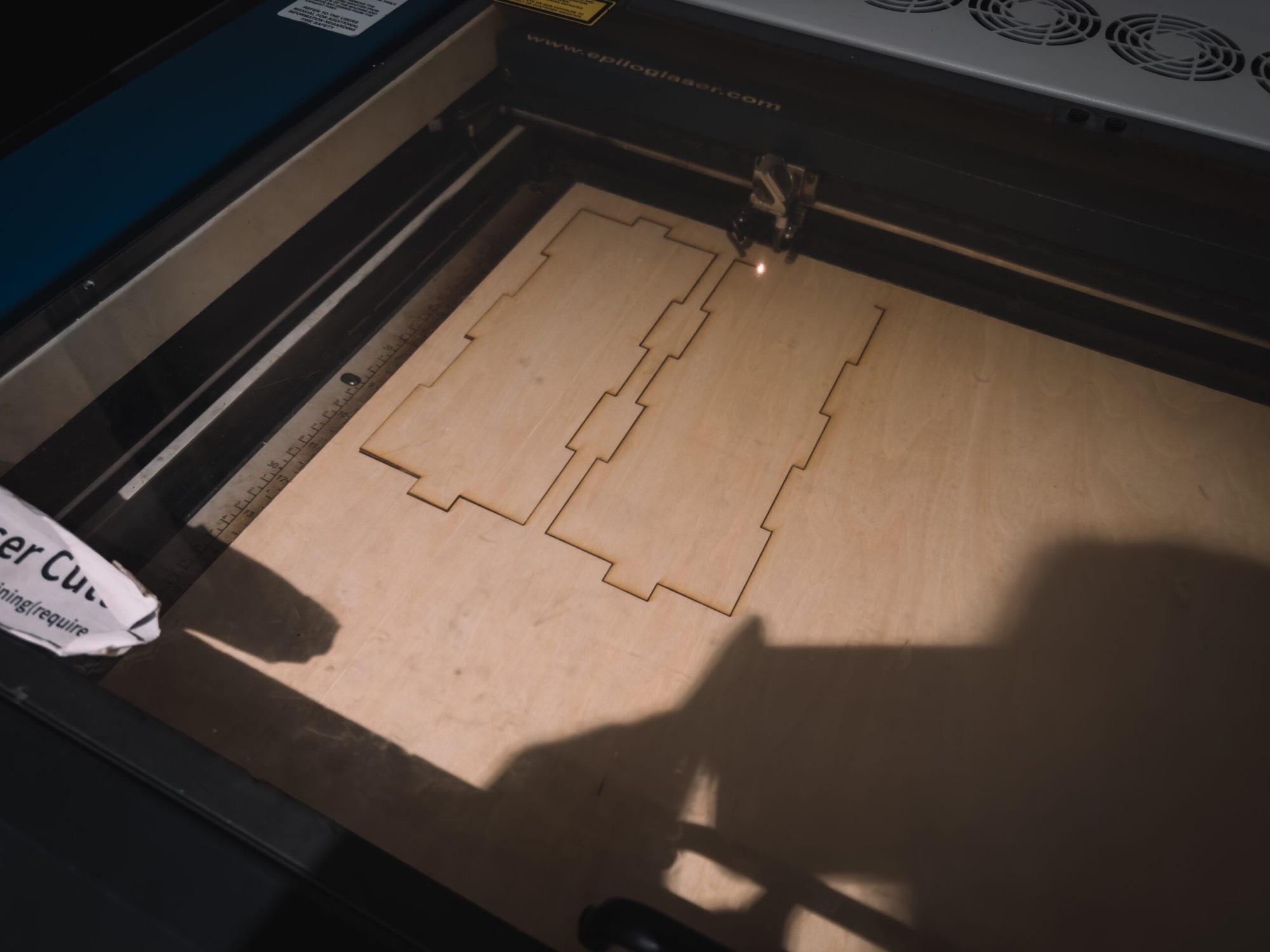
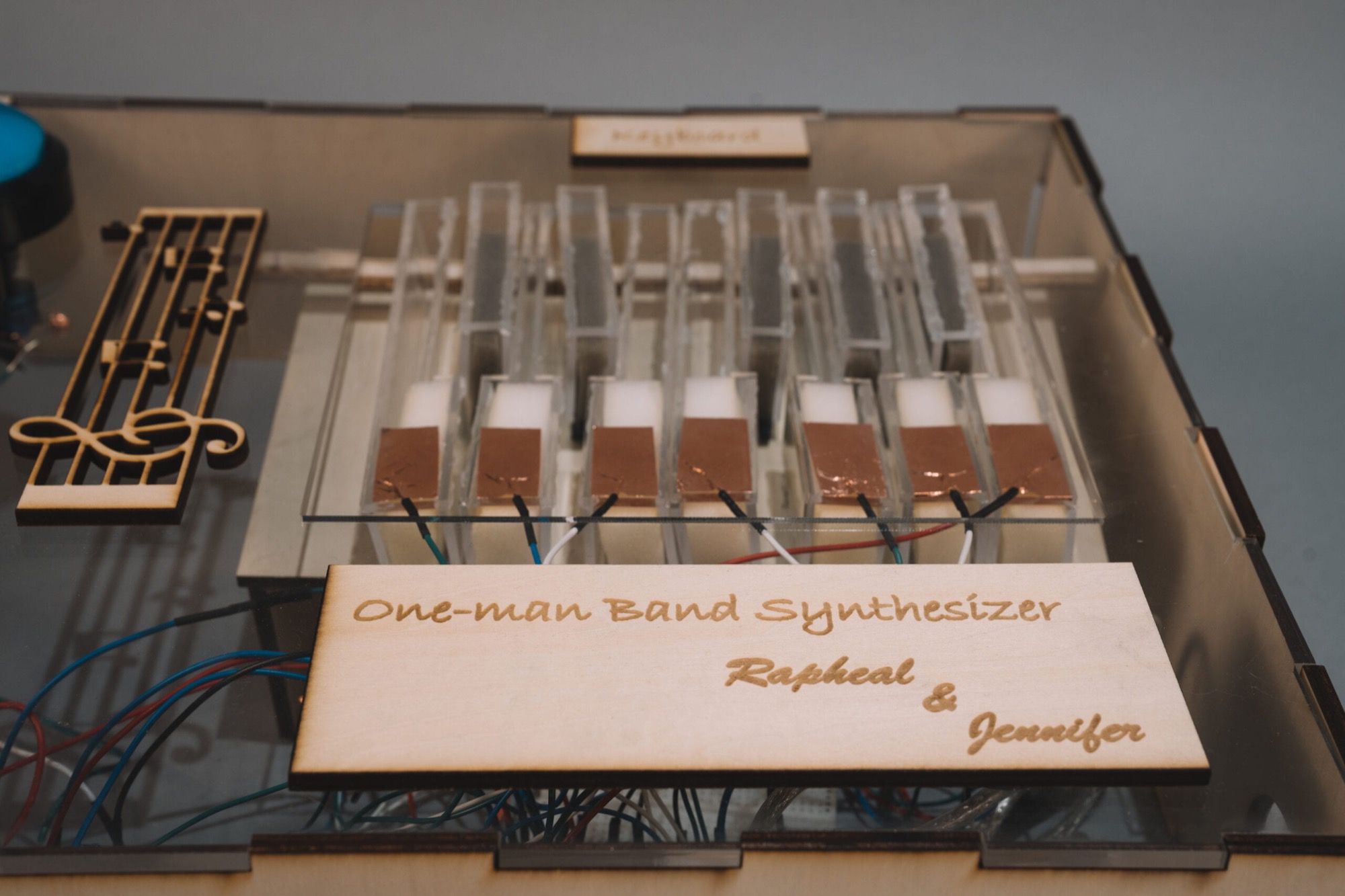
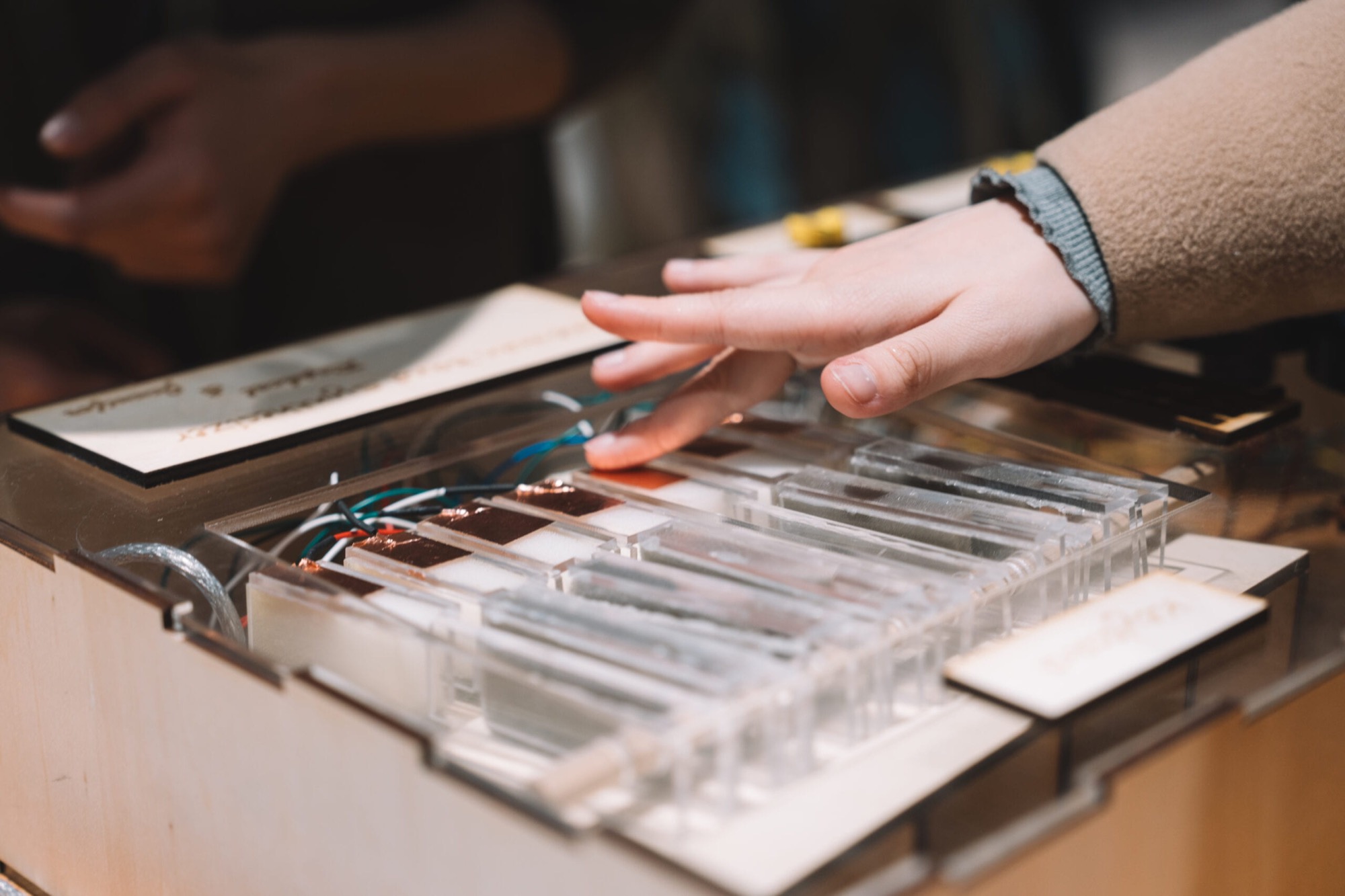
One-Man Band is a tabletop electronic instrument that condenses a band into a single laser-cut plywood console. Its surface is divided into three zones: a keyboard of transparent acrylic keys, a beat section of six oversized arcade buttons, and a pair of sliders for mixing the two voices live.
The project grew out of admiration for loop-station artistry and the accessibility of software-based arranging tools — we wanted the best of both: an instrument that lowers the barrier of instrumental skill while keeping the vibrancy and immediacy of live performance. An Arduino reads every touch and press, while a Processing sketch plays back sampled sounds and drives an audio-reactive LED strip.
Technical Elements
Capacitive Keyboard
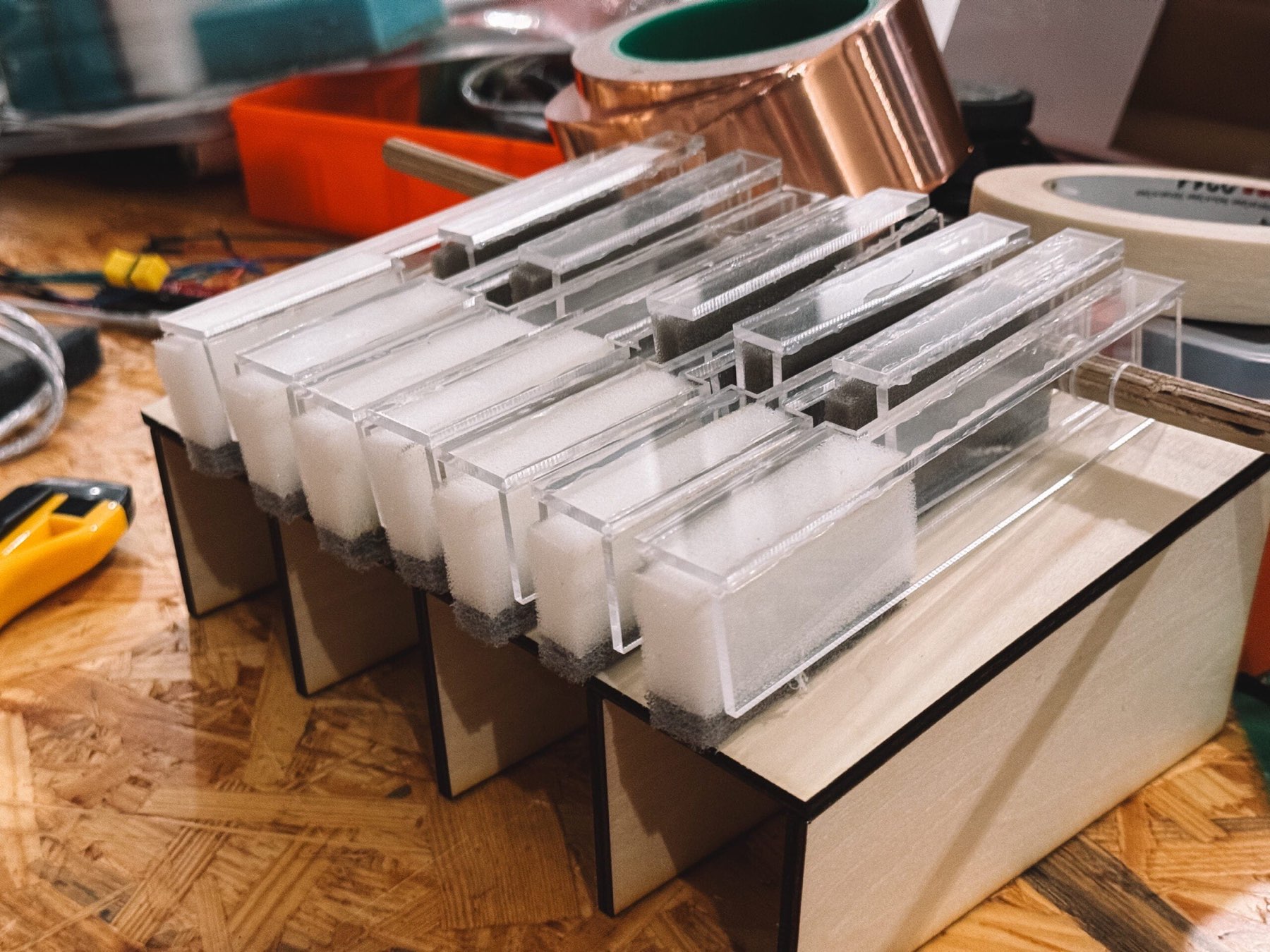
Transparent acrylic keys lined with copper tape act as capacitive touch sensors. Each touch triggers a sampled note — recordings we made from real pianos found around campus.
Arcade-Button Beats
Six large arcade buttons trigger kick, snare, hi-hat, hit, gong, and bell samples. Their firm, consistent action makes rhythm-keeping reliable in a way pressure sensors never were.
Live Mixing Sliders
Two analog sliders independently scale the volume of the keyboard and beat sections, letting performers balance their mix on the fly for any room or style.
Audio-Reactive Light
A Processing FFT analyzes the looping backing beat and streams sixty RGB values over serial to a NeoPixel strip, translating the music's frequency spectrum into light.
Process
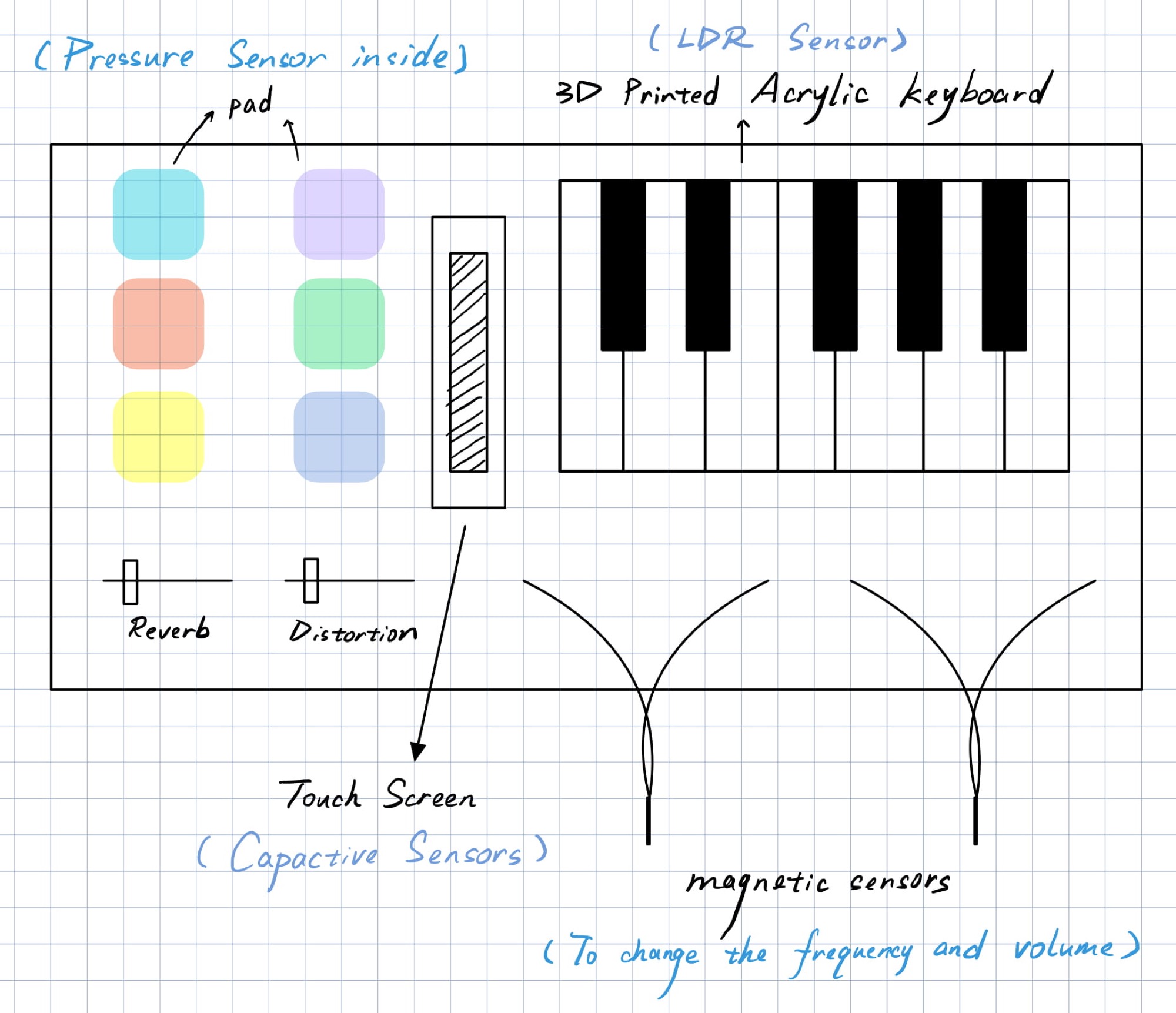
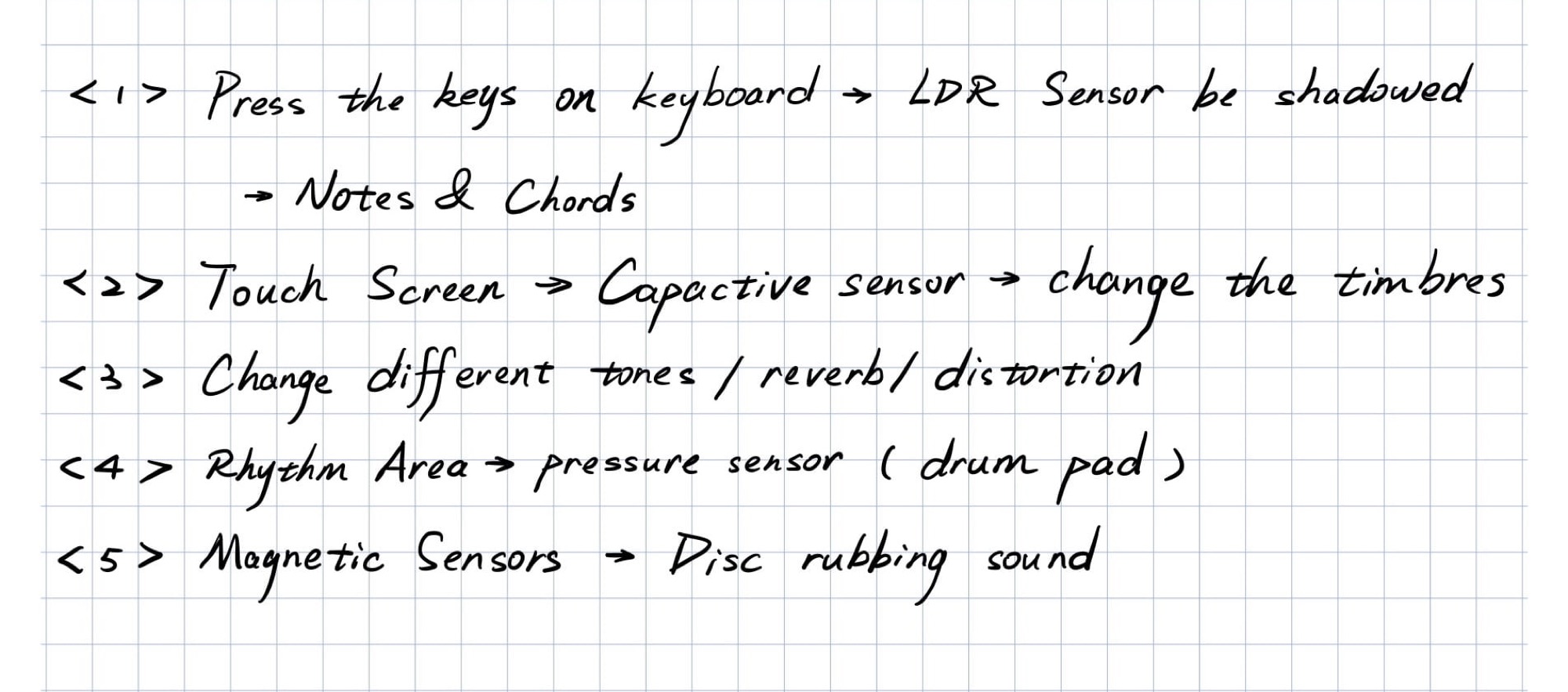
Almost every part of the instrument is a story of simplification. The keyboard was first imagined as a laser-and-spring mechanism — pressing a key would break a beam of light to trigger a note — but the structure proved too complex to build reliably, and we pivoted to capacitive sensing. The drum pads followed the same arc: pressure sensors suffered from delay and erratic sensitivity, so we swapped them for arcade buttons that fire every time.
User testing pushed the design further. What we had built were capable but disparate components; feedback urged us to use thicker material and a more robust frame to pull them into one cohesive body — and to put working functionality before the "cool" factor. Each hurdle resolved into a simpler, sturdier answer, and the instrument was better for it.
Reflections
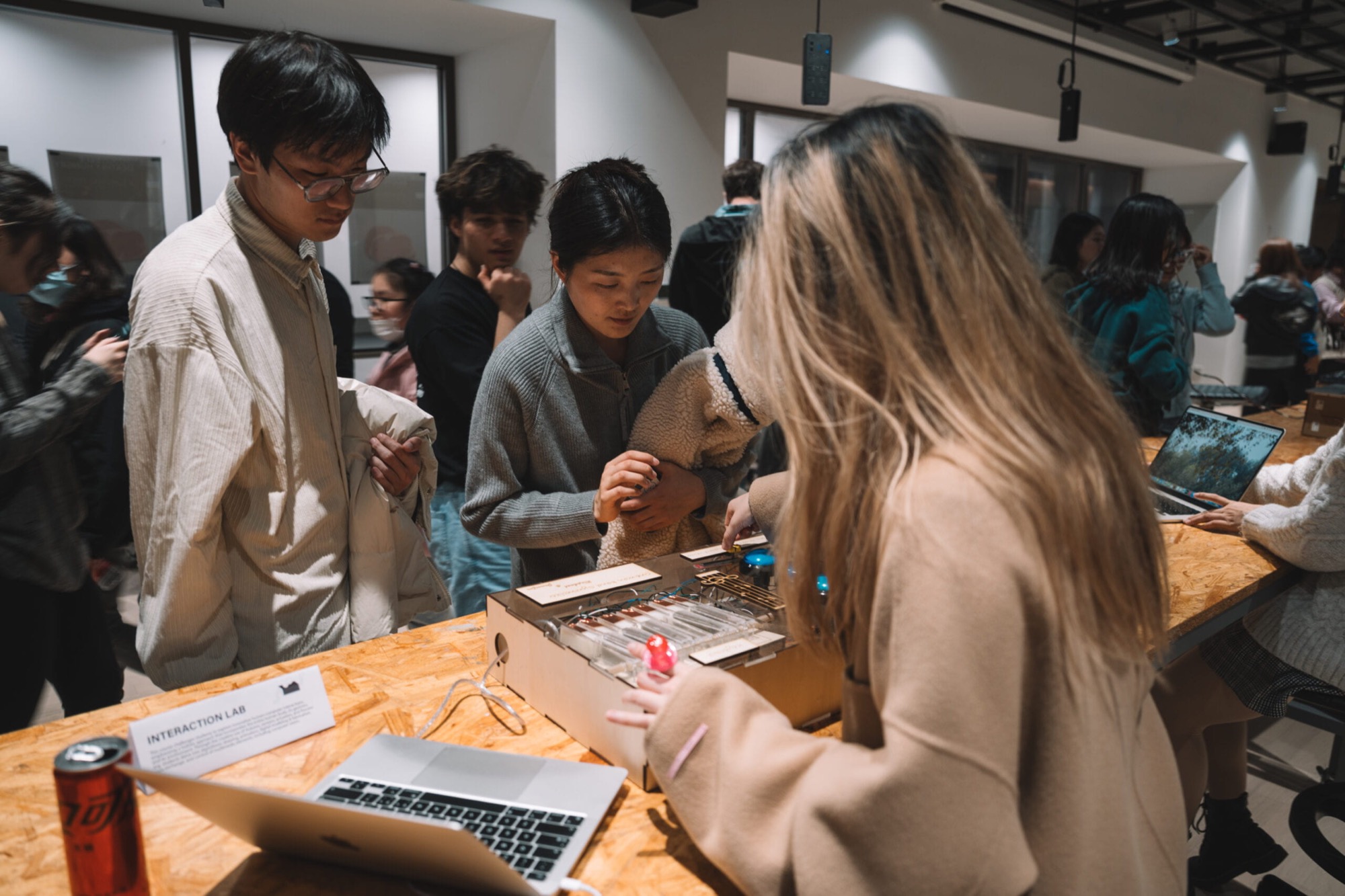
The project's real conclusion came at the IMA Show, watching visitors — classmates, strangers, children — lean over the console and find their own way into the instrument. People played it in ways we never scripted, revealing both the strengths of the design and its rough edges, and their feedback shaped the final iterations.
The setbacks taught us more than the successes: the value of flexibility in design, of honest user feedback, and of iterative testing and refinement. The result aligns with how we came to define interaction itself — ease of use, responsiveness, and adaptability to whoever sits down to play.
Created in collaboration with Jennifer. Special thanks to our instructor Eric, whose feedback on structure and focus steered the project toward a sturdier, more reliable design.
Future Directions
With more time, we would keep refining the interface for even greater intuitiveness and explore additional features that expand the instrument's capabilities — so that the gap between hearing music and making it keeps shrinking.
Built With
- Arduino
- Processing (Sound + FFT)
- Capacitive Touch Sensors
- NeoPixel / FastLED
- Laser-cut Plywood & Acrylic