Invisible Currents
Making the unseen motion of air visible through light
以光为媒,让无形的气流显形
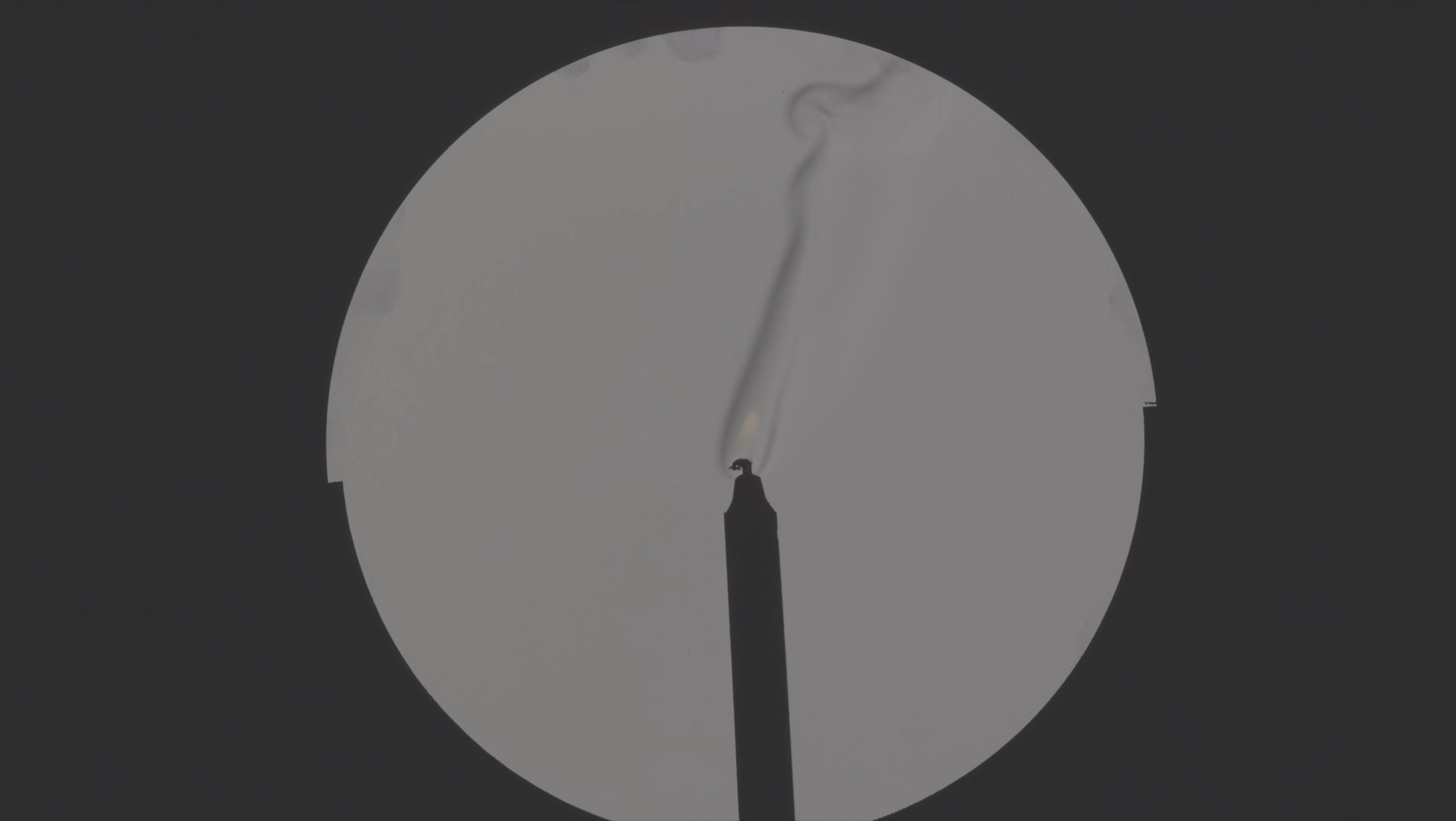
A concave mirror, a phone's flash, and a candle flame — ordinary objects aligned with optical precision until the warm air rising around us, invisible a moment before, unfurls as ribbons of drifting light.
一面凹面镜、一束手机闪光、一支蜡烛——几件寻常之物经过精确的光学校准, 让前一刻还无形的上升暖流,舒展成缓缓流动的光之纹理。
Overview
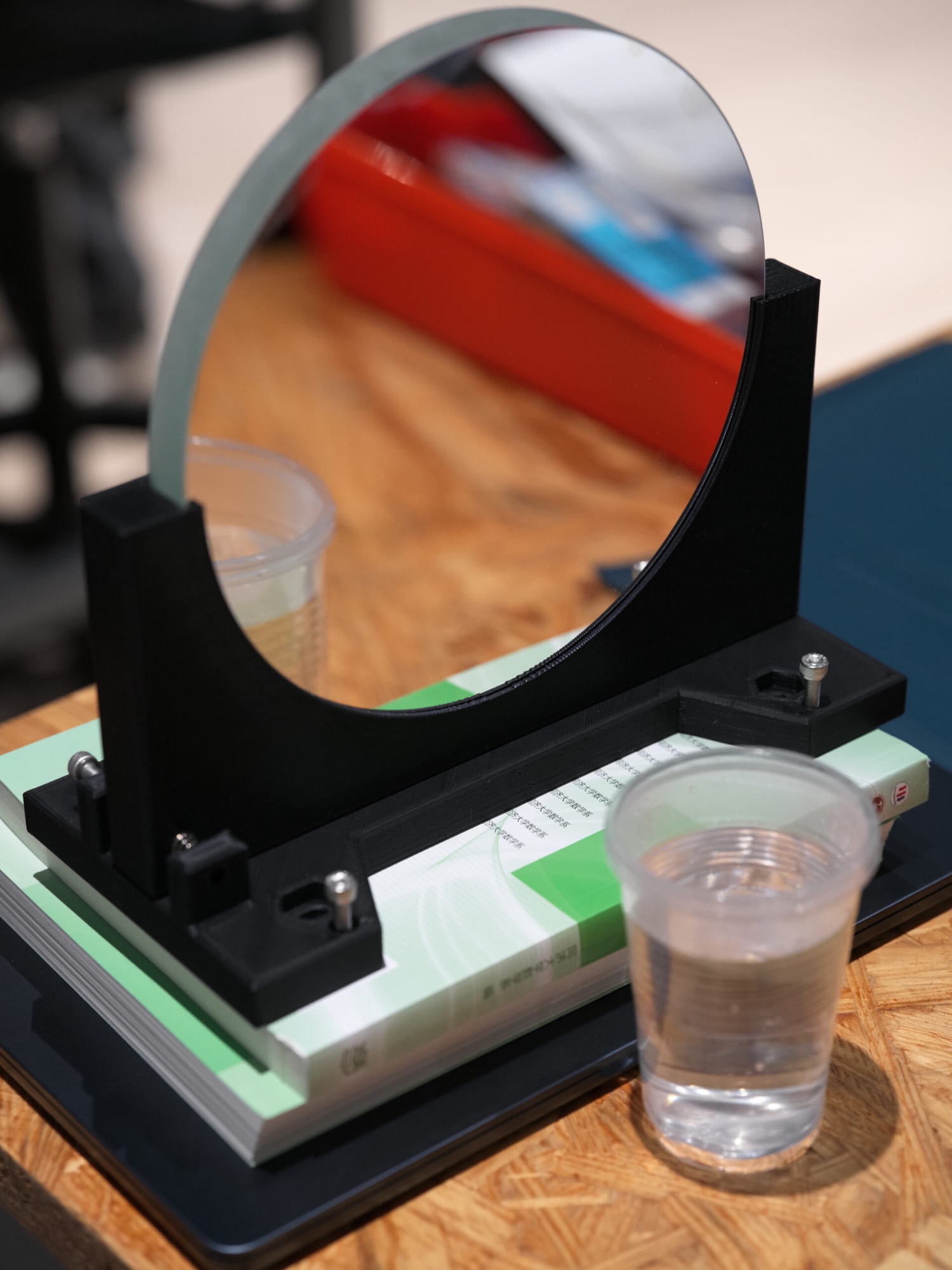
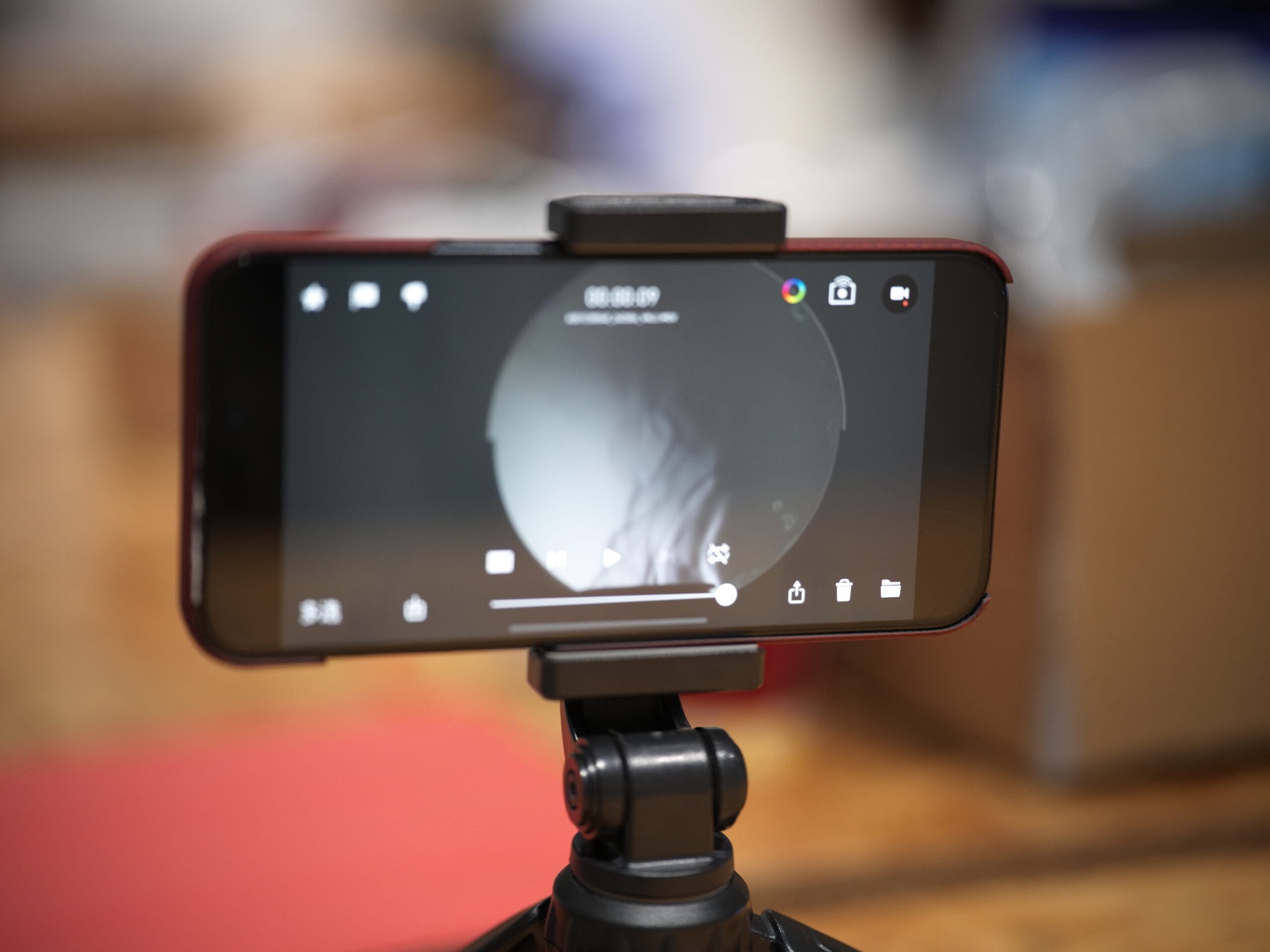
Invisible Currents is a tabletop optical installation that visualizes airflow. A concave mirror, held by a custom 3D-printed shelf, reflects and focuses the light of a smartphone's flash back into the phone's own lens. When a heat-emitting object — a candle flame, a cup of hot water — is placed in the beam's path, the subtle air currents rising from it bend the light, and the screen fills with a live, trembling image of moving air.
The piece grew from a fascination with visualizing the unseen: the challenge of taking everyday technology and a simple scientific principle and aligning them into an instrument of perception.
Context & Inspiration
The work is in conversation with Robert Irwin's notion of experiential perception — art that provokes a heightened awareness of one's own act of seeing — and with Merleau-Ponty's philosophy on the embodiment of space, the idea that perception and environment are inseparably intertwined.
By lending form to forces that constantly surround and touch us yet escape our notice, the apparatus becomes less a technical demonstration than a portal: an invitation to contemplate how much of our environment we only ever perceive indirectly.
Technical Elements
Folded Beam
The concave mirror is aligned so the phone's flash is reflected and focused back into the phone's own lens, forming a single folded beam of light. Any disturbance along that path registers immediately in the image.
3D-Printed Mount
A custom-printed shelf holds the mirror and lets its tilt angle be adjusted with precision — the critical degree of freedom for keeping flash, mirror, and lens in alignment.
Heat as Ink
Warm air is less dense than the air around it; as it rises through the beam it refracts the light, drawing its own flow patterns — a principle akin to schlieren imaging, rebuilt from everyday parts.
Open Interaction
Visitors are invited to introduce their own heat sources and watch the airflow patterns change in response, turning the optical bench into a small stage for experimentation.
Process
Development was a journey of experimentation and discovery. It began with research into the properties of light and reflection, then evolved into the 3D-printed shelf, tailored to adjust the mirror's tilt with precision. The critical step was alignment — returning the flash into the lens as a focused beam. Once a heat source entered the path, the effect of heat on air density became visible as distortions of the light, and the simple assembly turned into an effective visualization tool.
Reflections
When the piece was first shown, it drew people in precisely because of its ordinariness: a phone, a mirror, a flame, revealing a hidden layer of the room. The interactive element proved the most rewarding part — participants manipulated the heat sources themselves and watched the patterns shift — though keeping the lighting conditions right for the clearest effect took care. What I had not anticipated was the range of interpretations it sparked: conversations about the unseen forces around us and what they mean in daily life.
The project was equally a lesson in iterative design and creative problem-solving. Its successes — an effective visualization of airflow and an engaging, hands-on experience — came hand in hand with the challenge of fine-tuning the optics for consistent results.
Future Directions
The setup opens several paths forward: integrating more advanced optical components, turning the apparatus toward other environmental phenomena, and scaling the concept into educational tools or larger interactive installations — pushing further how we perceive and interact with the unseen world around us.
Built With
- Concave Mirror
- 3D-Printed Mount
- Smartphone Flash & Camera
- Candle & Heat Sources