GPS Random Scoring Machine
A pinball-driven Rube Goldberg machine that hands out grades by pure chance
一台以弹珠链式反应、纯凭运气发放成绩的机器
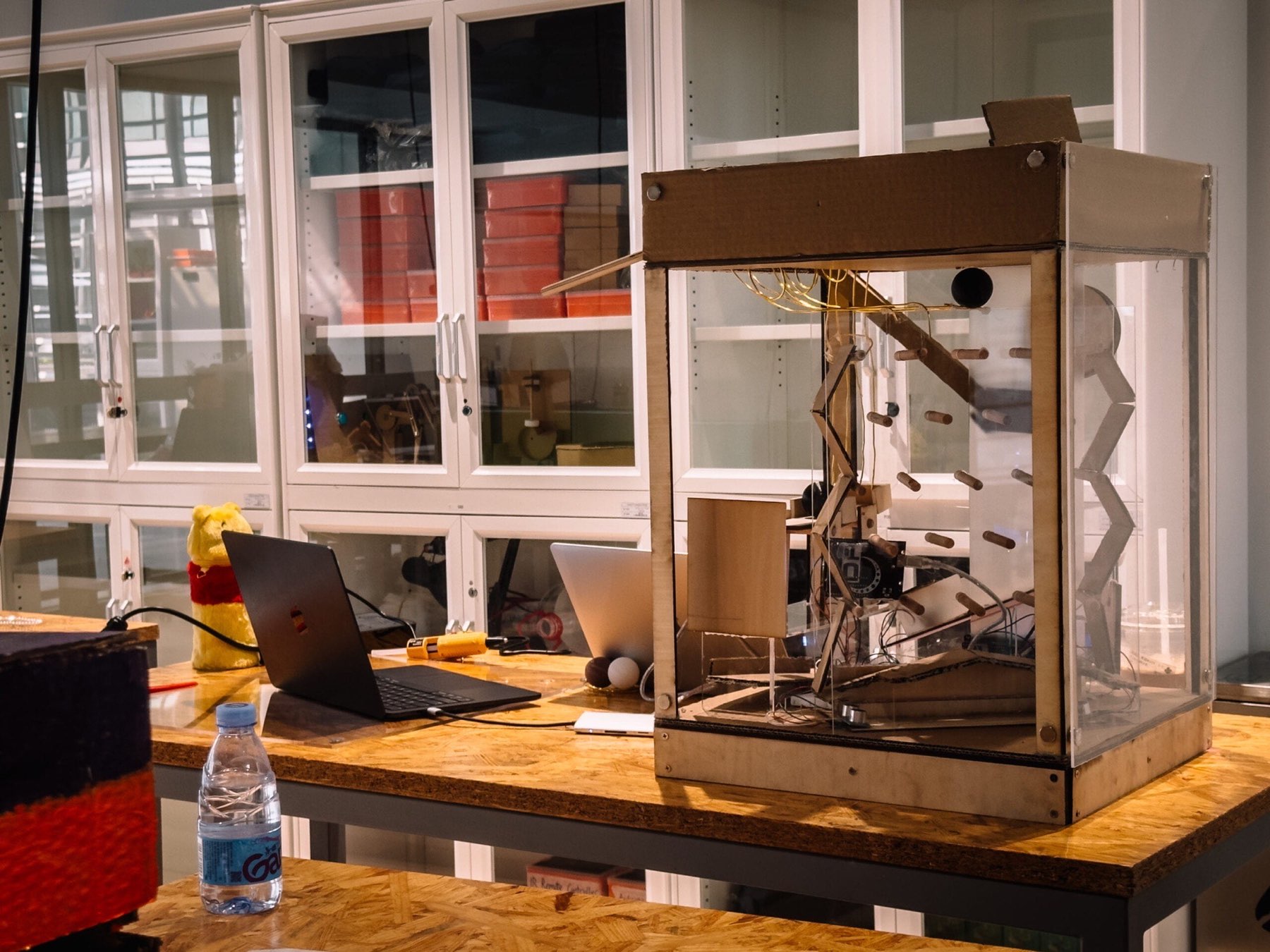
Every week our GPS seminar returned reading-response grades that no one could quite explain. So we made the arbitrariness literal: launch a ball, watch it tumble through a tower of chain reactions, and let physics decide your score.
GPS 研讨课每周发回的评分总让人摸不着头脑。于是我们干脆把这种随机感做成实体—— 发射一颗小球,看它在层层机关间翻滚坠落,让物理来决定你的成绩。
Overview
GPS Random Scoring Machine is a self-ironic interactive installation made together with Jennifer. It pokes fun at the weekly reading-response grades in GPS — Global Perspective on Society, a course every NYU Shanghai freshman takes — scores that often felt impossible to predict.
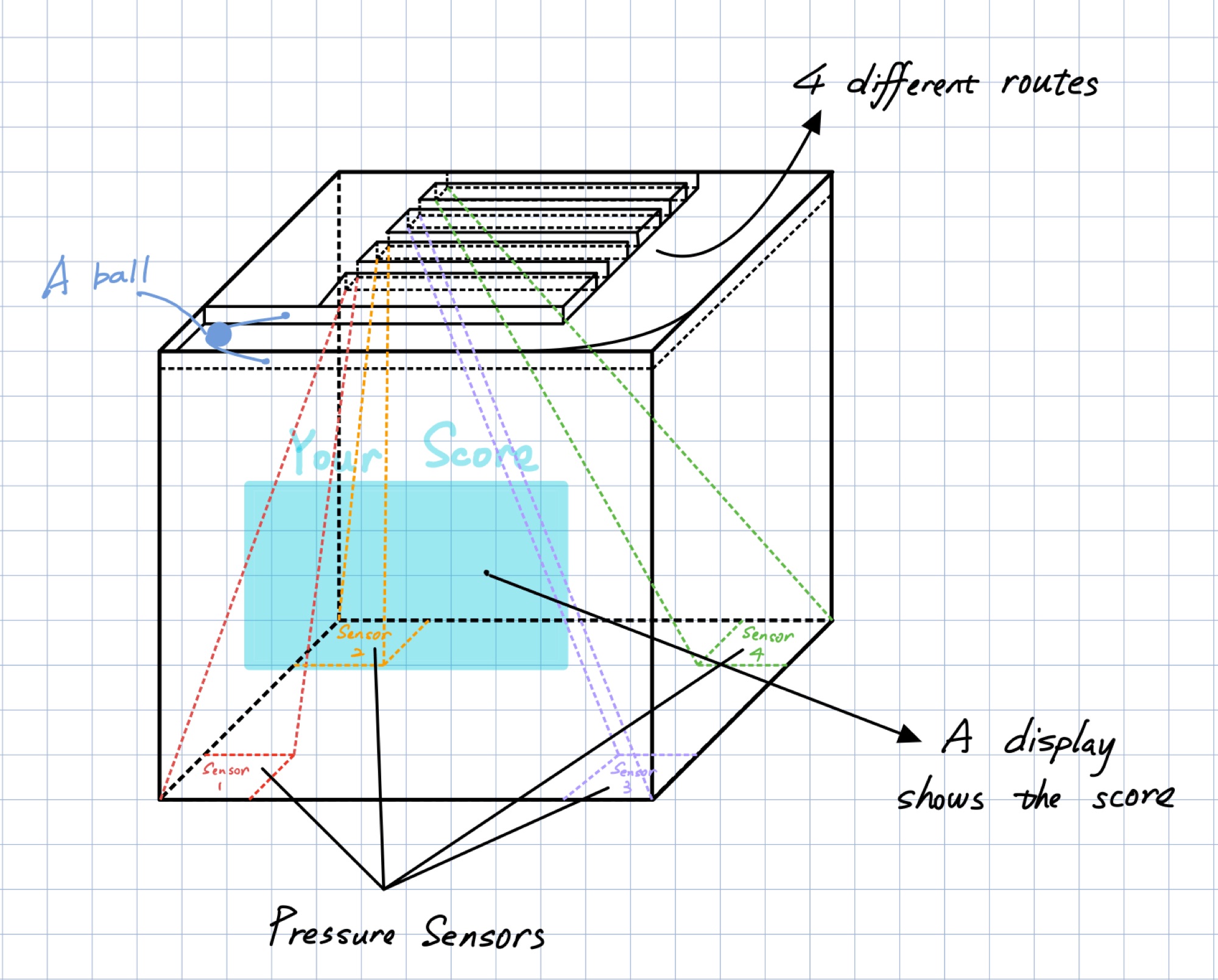
The piece plays like a vertical pinball cabinet crossed with a Rube Goldberg machine. A visitor launches a ball down a track; depending on the launch strength, it drops into one of four lanes, sets off a cascade of mechanical relays, and finally comes to rest on a sensor. An LCD then announces the grade the machine — entirely at random — has decided you deserve.
Concept & Design
The design began as a mash-up of retro mini-games. From old-fashioned pinball we borrowed the launch: the harder you shoot, the further the ball travels before falling into a lane. From Rube Goldberg machines — those elaborate contraptions where one reaction triggers a chain of others just to pick up a drink or answer a phone — we borrowed everything that happens after.
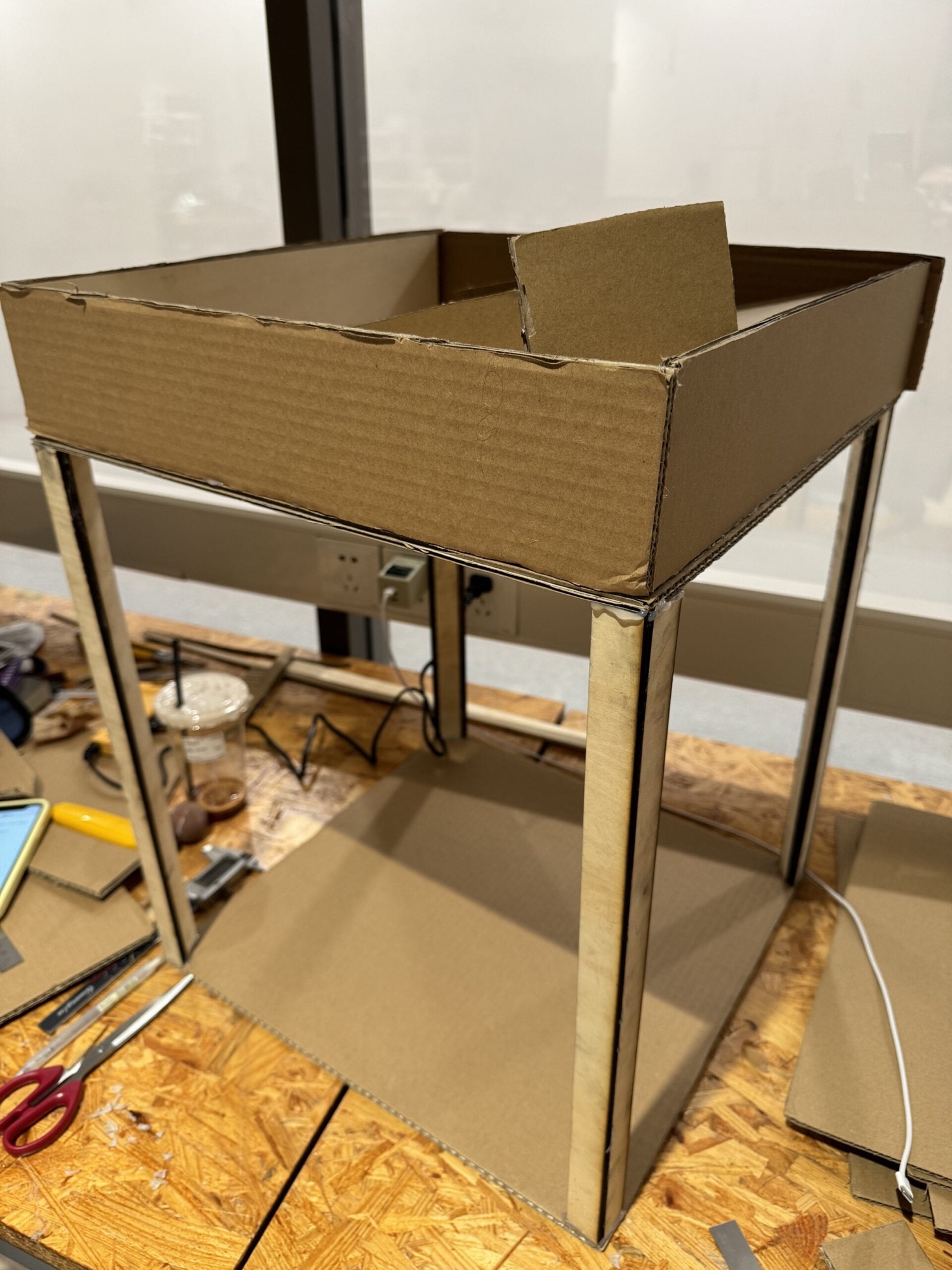
Material choices followed the physics. The installation stands tall and takes repeated impacts, so the base plate, pillars, and facades use rigid wood and acrylic, while lighter, low-density cardboard fills in the rest to keep the overall weight down. An all-cardboard version was considered and rejected — it would likely have collapsed the first time a ball was launched.
Technical Elements
Launch Mechanism
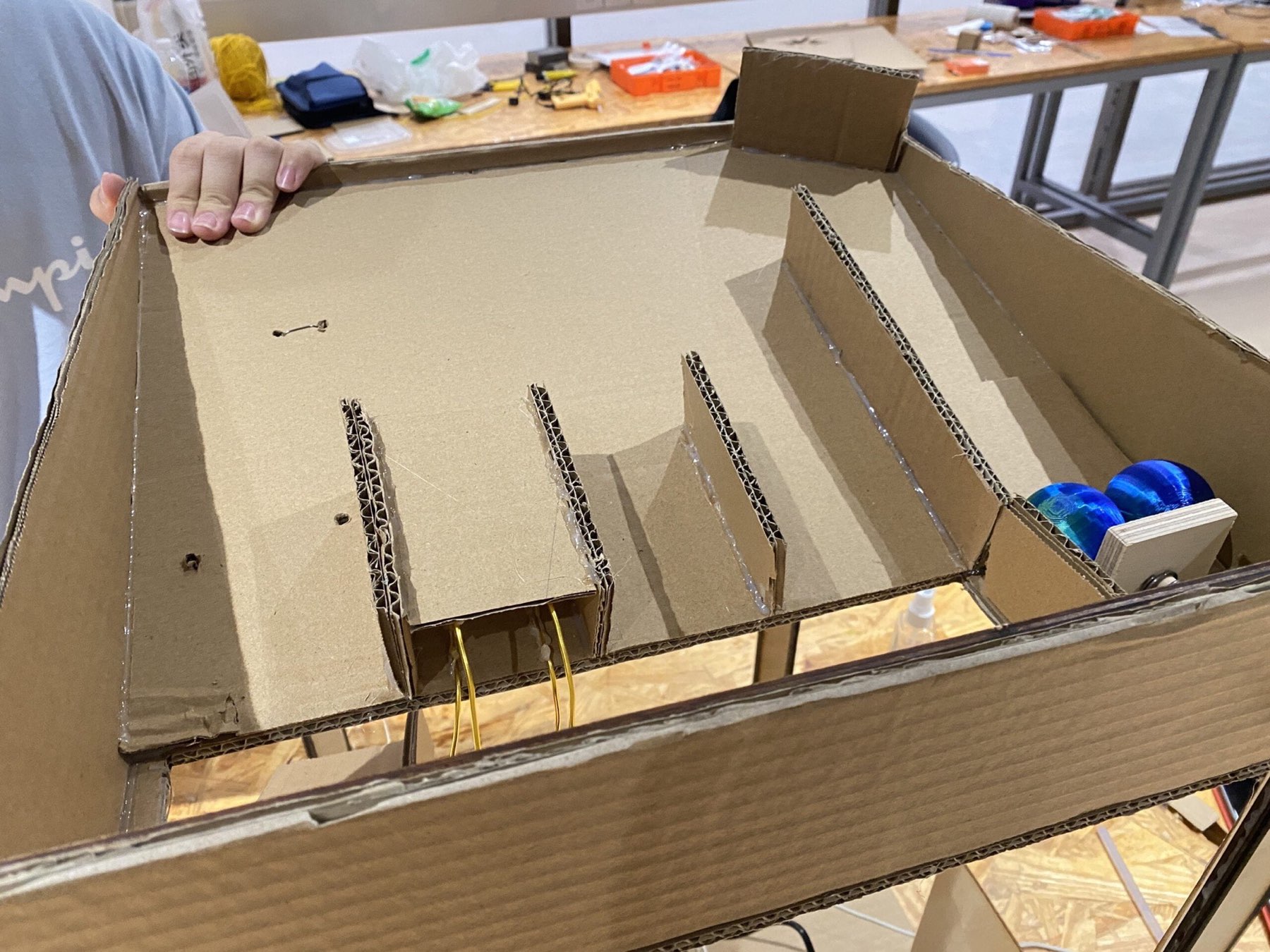
A plunger sends the ball down the entry track, and launch force alone decides which lane it drops into. After user testing, the original spring — too stiff to trigger the chain reactions reliably — was replaced with a wooden push-rod driven directly by the player's thrust.
Chain Reactions
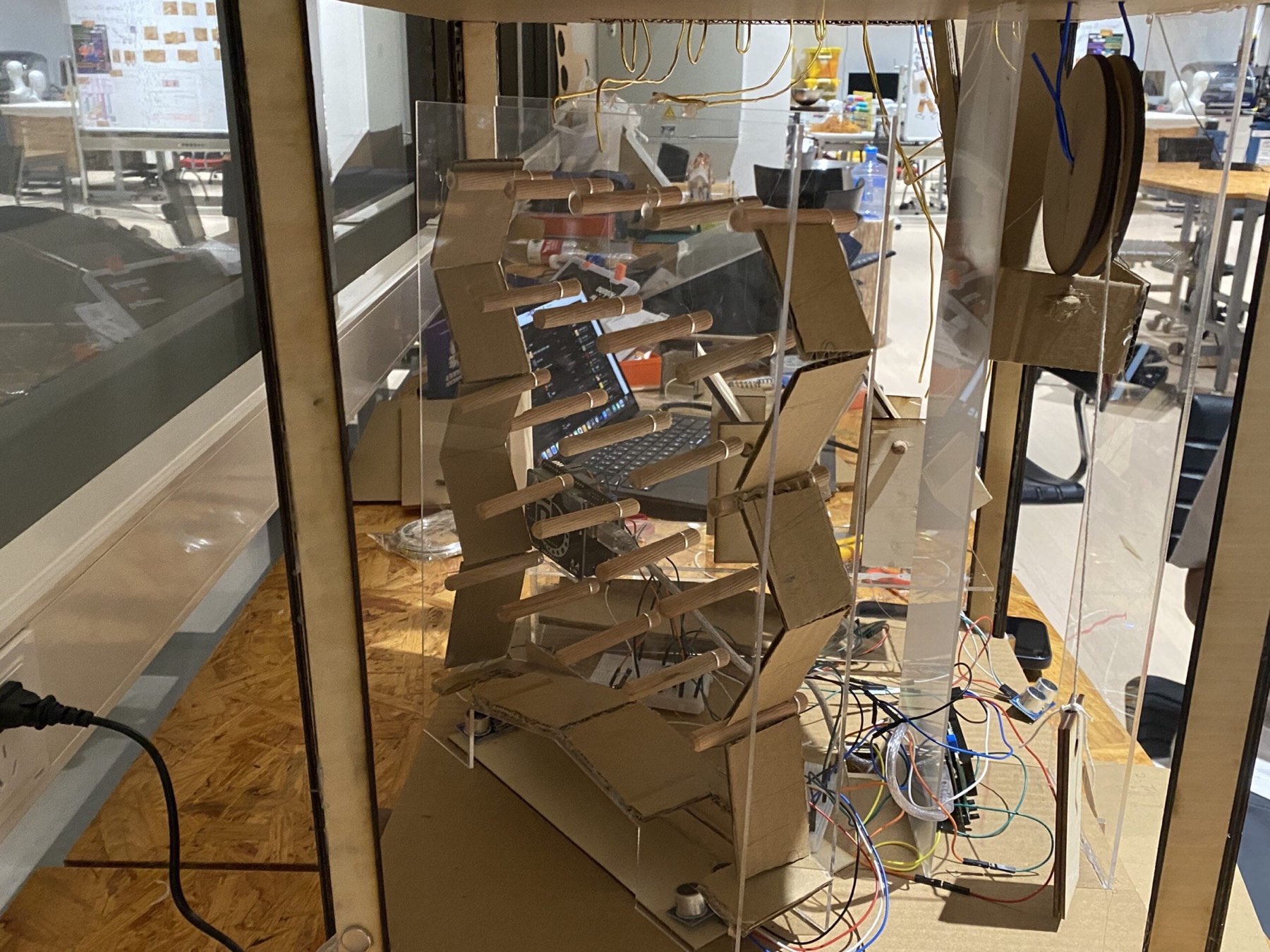
Each lane feeds a cascade of ramps and relays that carries the ball down through the tower. The build is really five small projects in one, from launch to scoring, every stage hand-tuned so the ball neither sticks nor bounces away.
Ultrasonic Sensing
Pressure sensors could not reliably register the ball's light impact — a concern raised by our professor and confirmed in testing — so each landing zone is watched instead by ultrasonic distance sensors that detect the ball's arrival.
Dual-Arduino Scoreboard
With the LCD occupying most of the pins, each board has room for only two sensors, so the system runs on two Arduinos. Whichever sensor the ball reaches, a 16×2 LCD prints the verdict — "You get B".
Process
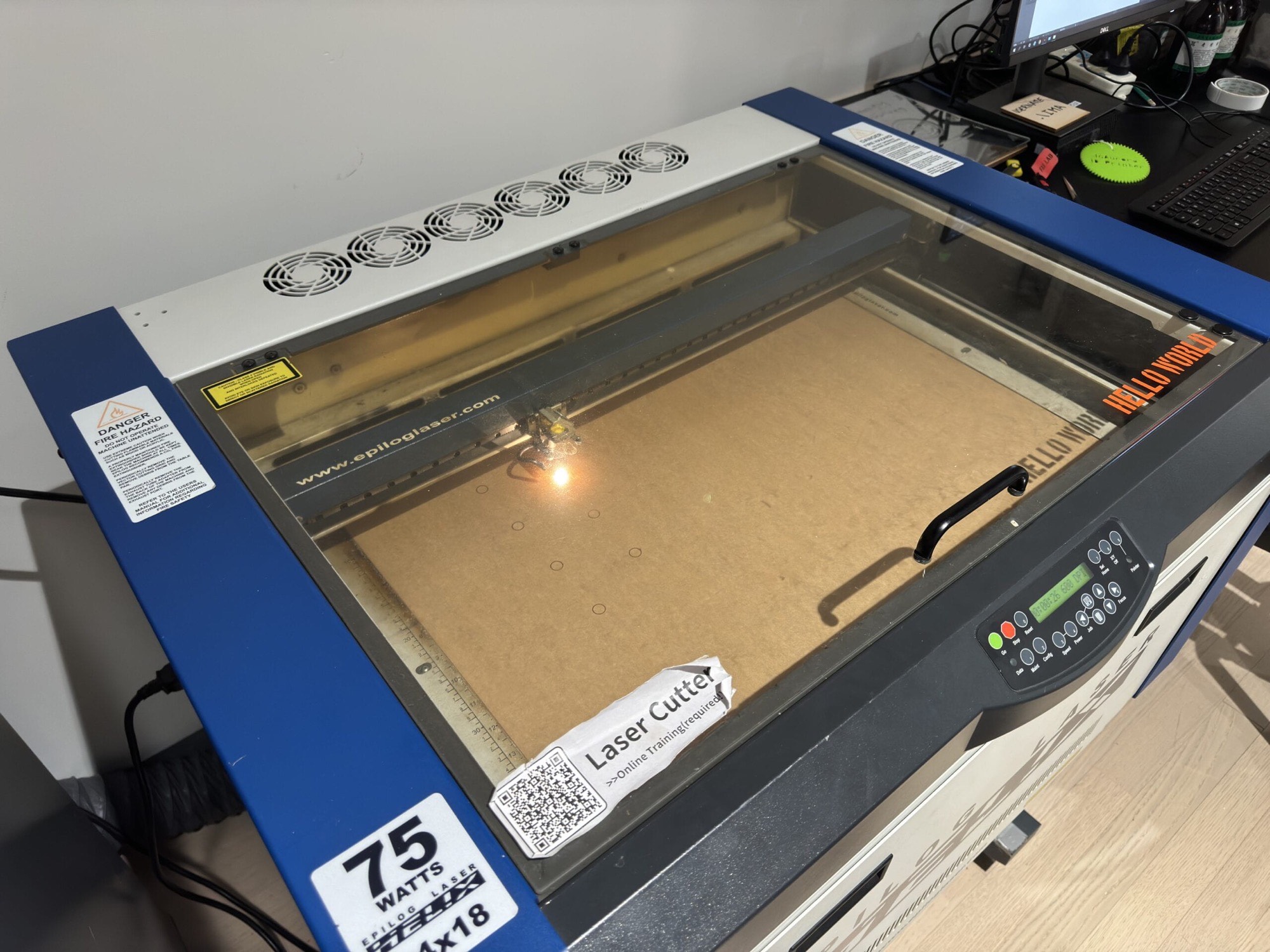
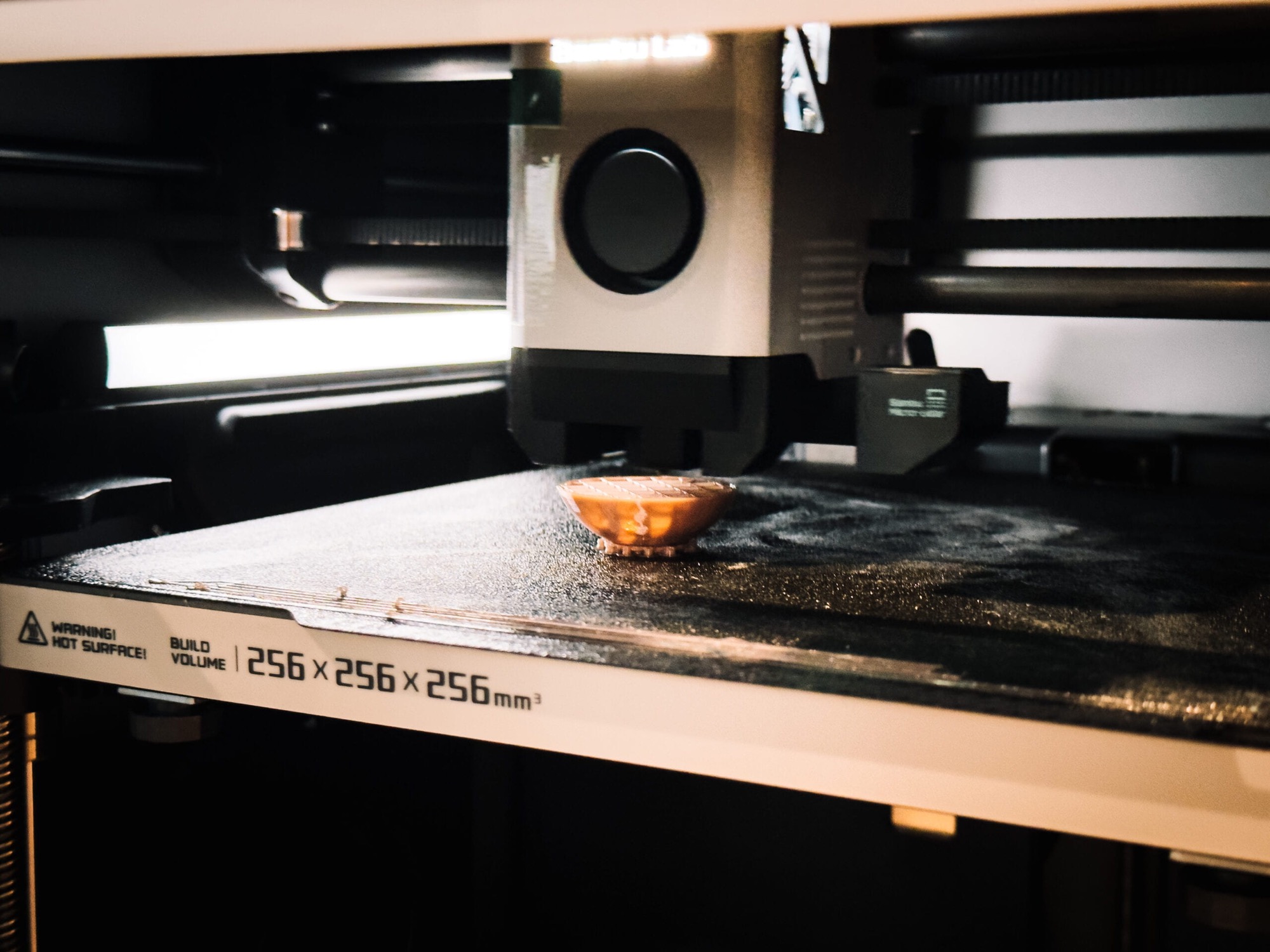
The build consumed a full week of roughly seven-hour studio days. We learned laser cutting and 3D printing along the way — the former for the wood and acrylic boards, the latter for the balls themselves — and worked side by side on nearly every task, which made it far easier to catch each other's mistakes.
Most of that time went into tuning: adjusting the curvature and length of each track little by little so the ball follows its intended path, and the spacing between boards so it drops in cleanly without jamming or ricocheting out. The circuitry and display were then tucked inside the body to keep the machine's face uncluttered.
User testing reshaped two key parts. Visitors found the launcher too weak to set off the chain reactions, which led to the push-rod redesign, and the planned pressure sensors gave way to ultrasonic ones once the ball's gentle landings proved undetectable.
Reflections
After a punishing week, the machine reached the showcase in complete working form — launch, four diverging paths, chain reactions, detection, and a grade on screen. Audiences responded warmly to its creativity and interactivity, and to the joke underneath: many feedbacks fired from a single ball, with each path offering its own small spectacle.
It is not a perfect machine. The structure is less rigid than I would like, mechanisms occasionally fail to trigger, and the circuit has its moods. But the repeated failures taught me something I have kept since: steady improvement may never guarantee the goal, yet it always keeps you moving toward it.
Built together with Jennifer. Thanks to Professor Eric Parren for guidance throughout — from material suggestions to the sensor advice that made the scoring reliable.
Built With
- Arduino ×2
- Ultrasonic Sensors (NewPing)
- 16×2 LCD (LiquidCrystal)
- Laser Cutting
- 3D Printing
- Wood · Acrylic · Cardboard