Echoes of Light
A miniature church where programmed light rehearses the passage of a day
一座微缩的光之教堂,程序化的光在其中排演一天的流转
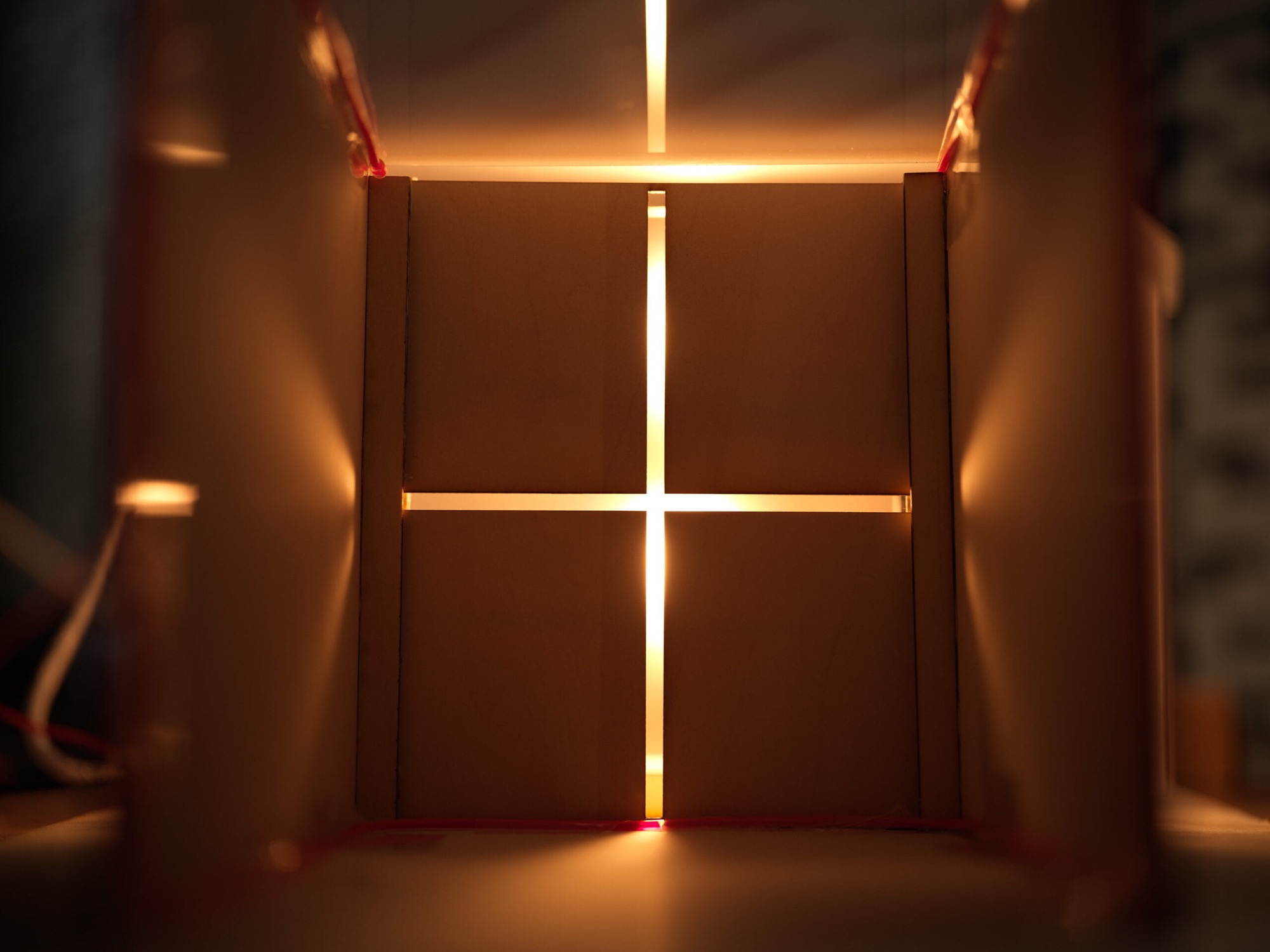
In Tadao Ando's Church of the Light, a single cut in concrete turns daylight into presence. Echoes of Light condenses that idea into a tabletop model, where programmed lamplight rehearses the sun's full journey — dawn to dusk to night.
在安藤忠雄的光之教堂里,混凝土上的一道开口让日光成为一种"在场"。《光之回响》把这个念头 收进一座桌面模型——程序化的灯光在其中排演太阳从黎明到黄昏、再到入夜的完整旅程。
Overview
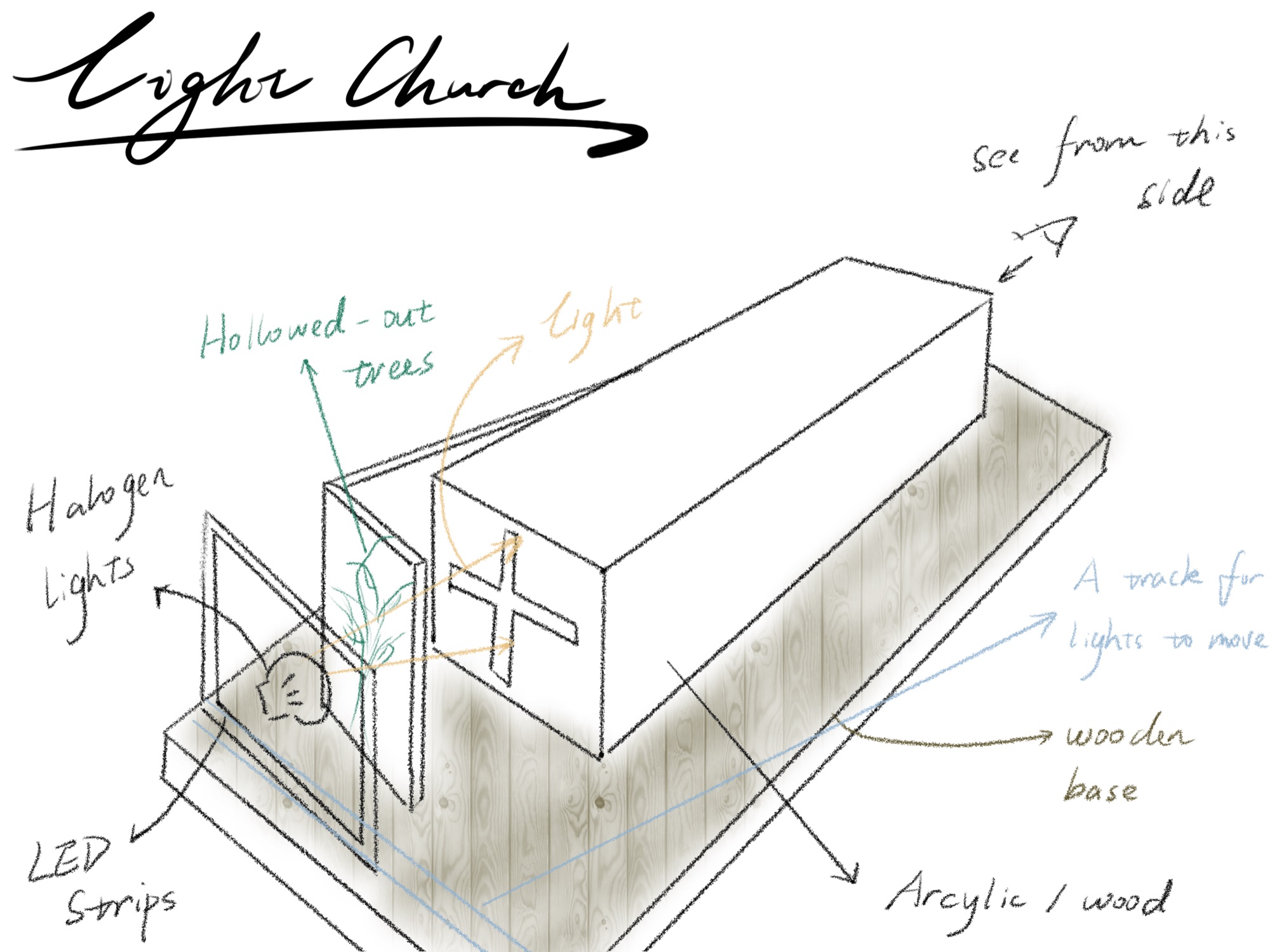
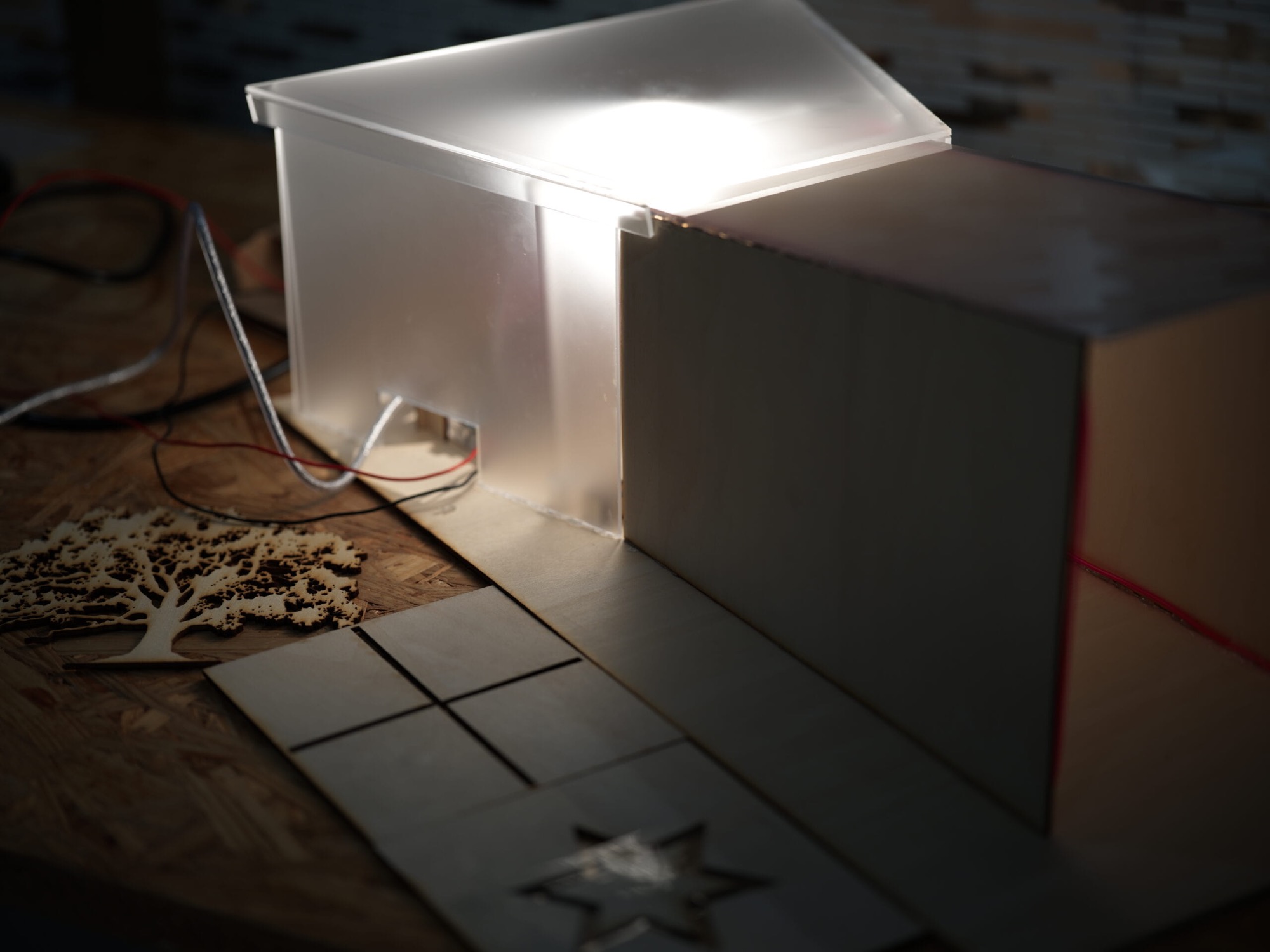
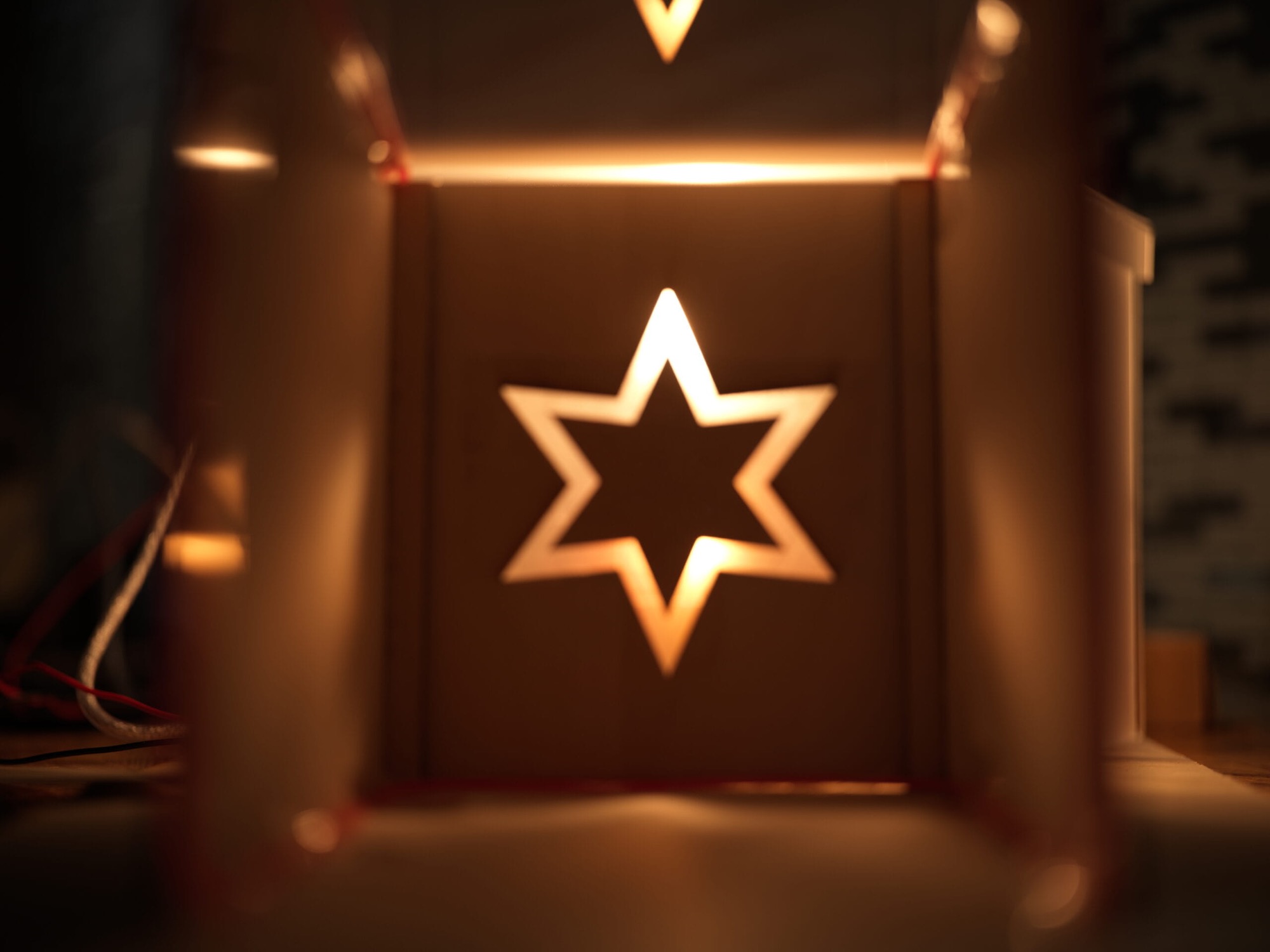
Echoes of Light is a miniature architectural model inspired by the Church of the Light — built not as a replica, but as an instrument for studying how light behaves inside a contained space. Translucent and frosted acrylic work in concert with laser-cut wooden panels, and each layer manipulates the light in its own way: one smooths and diffuses it, one casts the silhouette of a tree, and others shape it into a cross, a hexagram, and other distinct figures.
Two halogen light sources alternate in intensity and position to mimic the sun's arc across the sky, while a luminous EL wire traces the structure to evoke the calm of nightfall. As the lights shift, the shadows inside morph with them — a contained simulation of the day's natural progression that invites viewers to linger on the subtleties of time and perception.
Context & Inspiration
The project sits at the intersection of light art, kinetic art, and perception studies. From Tadao Ando it borrows the conviction that light alone can construct space and emotion; from James Turrell, the insistence that the perception of light is the artwork. The morphing shadows nod to the kinetic art movement, where motion is fundamental to meaning, and to op art's fascination with visual illusion — in the spirit of Victor Vasarely's belief that "the art of tomorrow will be a collective treasure, or it will not be art at all."
Process
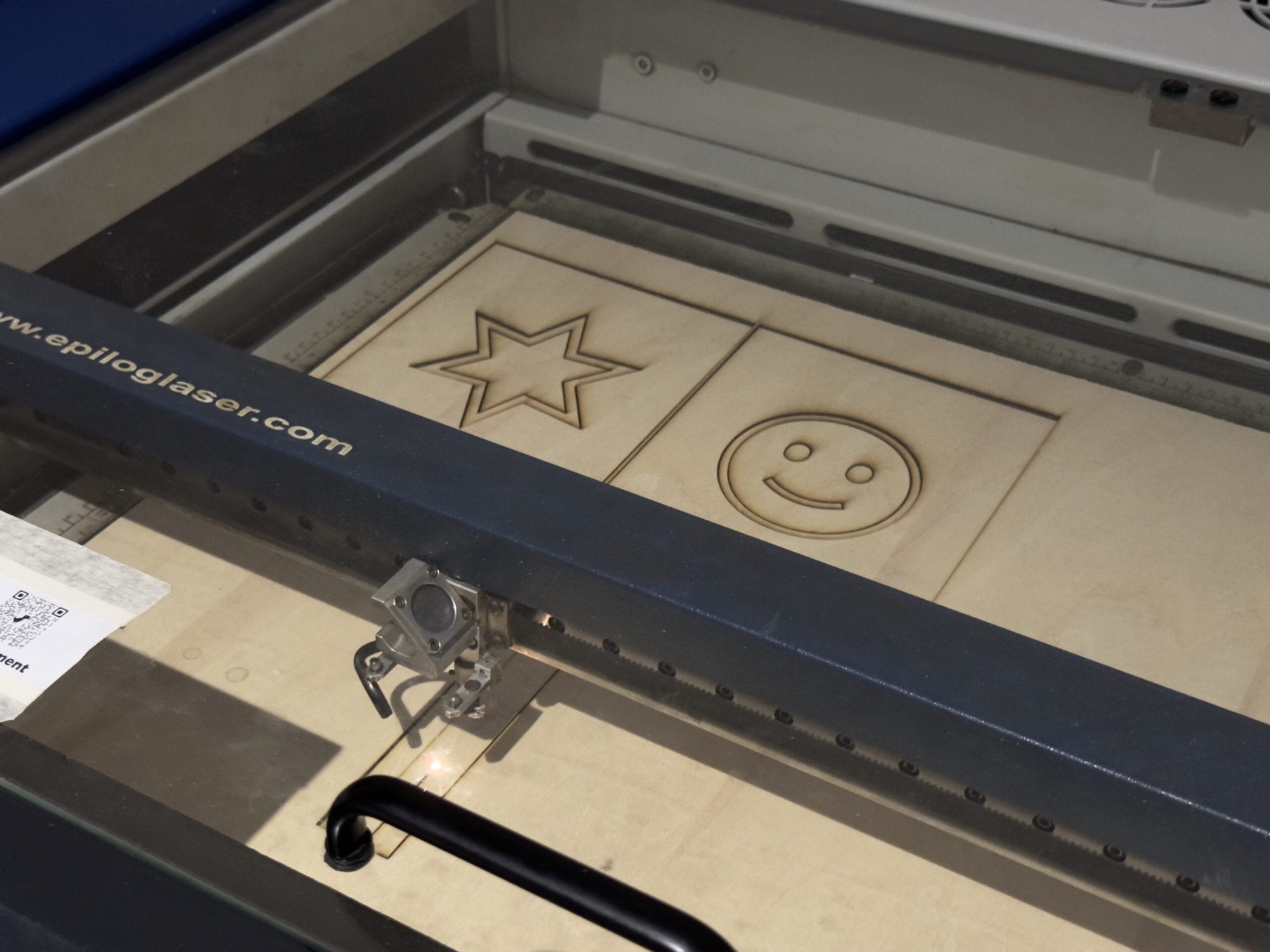
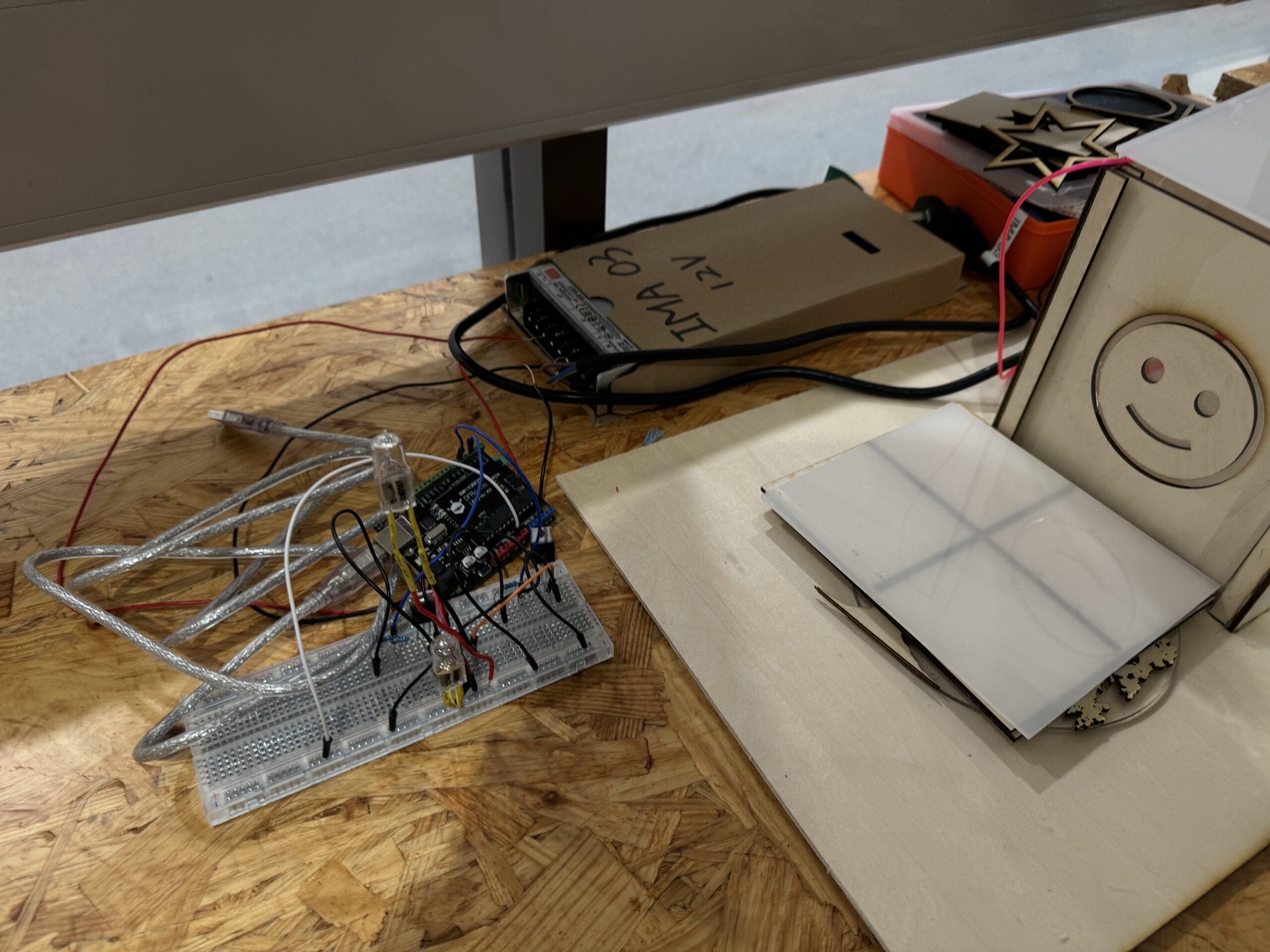
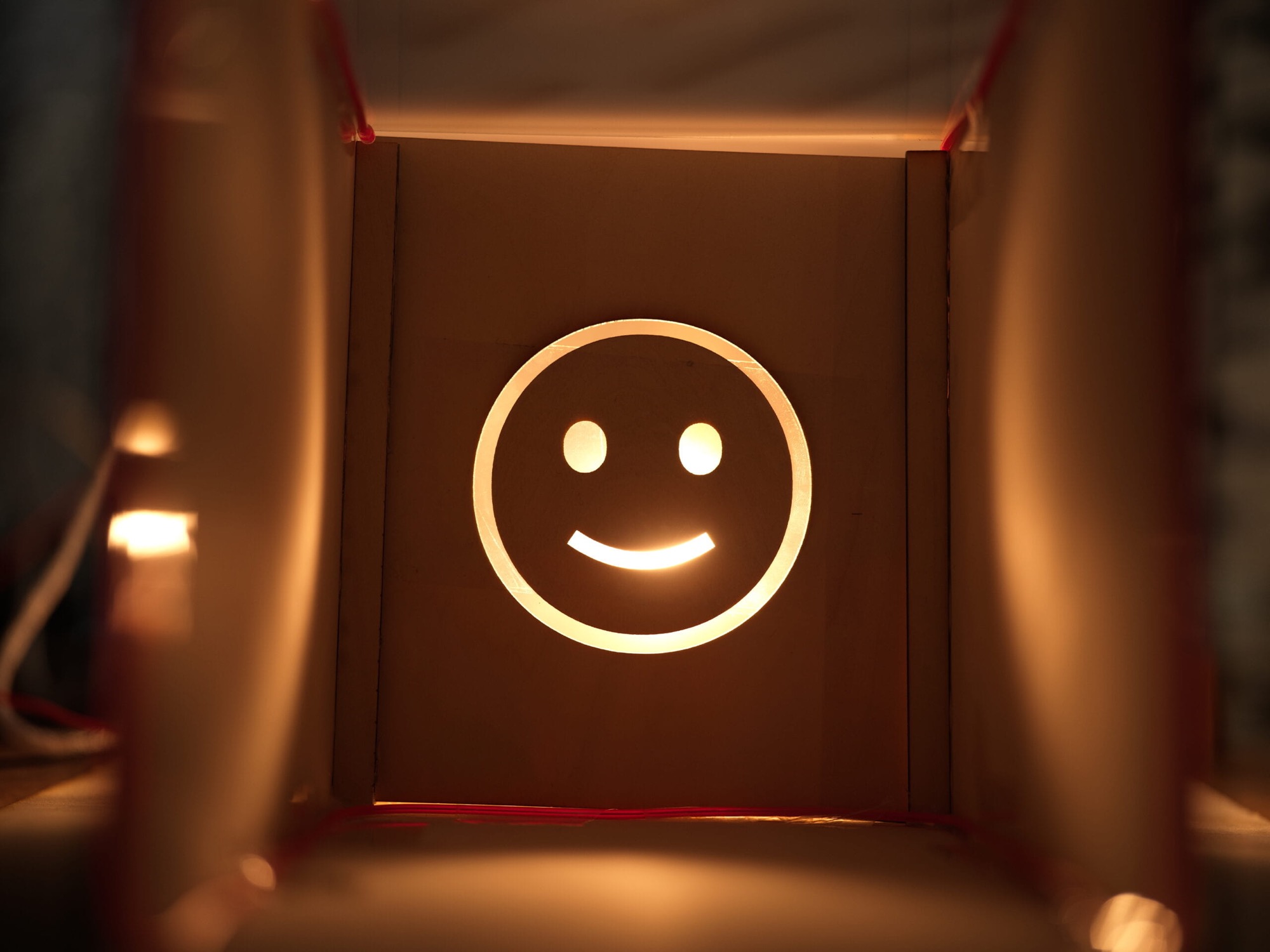
Development began with studies of light behavior and shadow play, sketching how a sequence of screens could stage the passage of a day. Material choices were decisive: translucent acrylic to diffuse, frosted acrylic for a soft glow, wood for natural contrast. The shadow panels — tree, cross, hexagram, star, smile — were laser-cut, and several prototypes tested how light scattered between the layers before the final cycle was programmed: two halogen sources for sunrise and sunset, EL wire for the night.
Technical Elements
Layered Light Filters
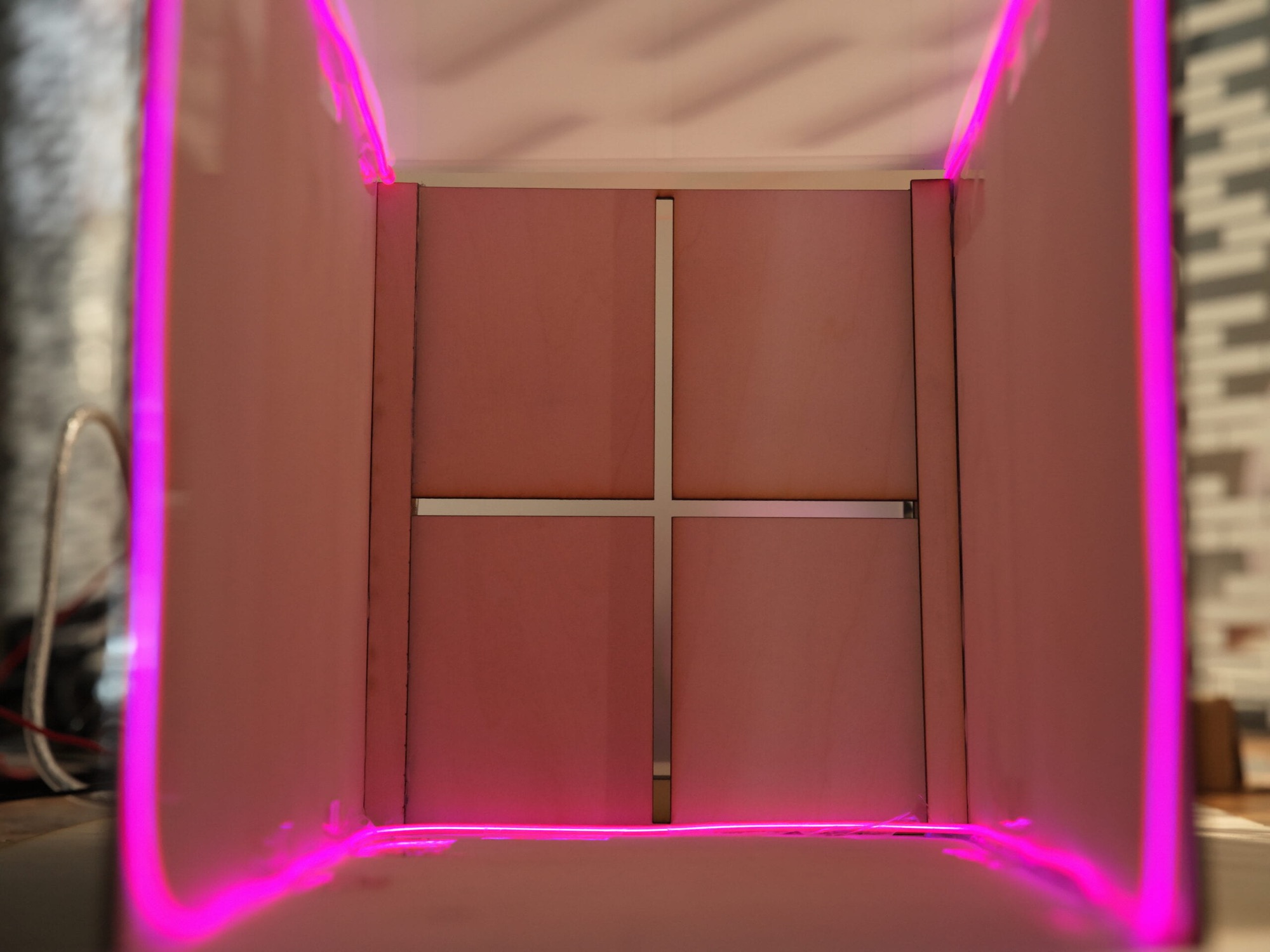
Three layers, three jobs: a smooth acrylic panel diffuses the source, a laser-cut tree silhouette casts thematic shadows, and swappable pattern panels shape the light into a cross, a hexagram, and other figures.
Programmed Day Cycle
Two halogen lights alternate in intensity and position, emulating the sun's transit from sunrise to sunset so the shadows inside the model slowly travel and transform.
EL Wire Nightfall
After the "sun" goes down, a luminous line traces the structure's edges — shifting the interior from warm drama to the cool stillness of night.
Material Contrast
Translucent acrylic, frosted acrylic, and wooden panels each treat light differently — diffusing, glowing, blocking — so a single source unfolds into layered depth.
Reflections
When the piece was shown, audiences were first drawn in by the changing lights, then by the invitation to move around it — peering in from different angles to catch the shadows mid-shift. The material choices and the dynamic rendering of natural light drew particular praise, while the most useful note pointed elsewhere: the interior was hard to see into, and opening up the view would let the light do more of its work.
The challenges ran from selecting the right materials to programming the light sources, and the project ultimately reframed how I think about light — not as illumination for an artwork, but as the medium itself. Most of what this model understands about light, it learned through prototypes that failed first.
Future Directions
Audience feedback points clearly at the next iteration: opening the structure so the interior light is easier to observe, and adding interactive elements that let viewers steer the light themselves. Beyond this model, I want to keep probing the relationship between light, shadow, and perception — at larger scales, with more responsive control.
Built With
- Translucent & Frosted Acrylic
- Laser-cut Wooden Panels
- Halogen Lights
- EL Wire
- Programmed Light Sequencing